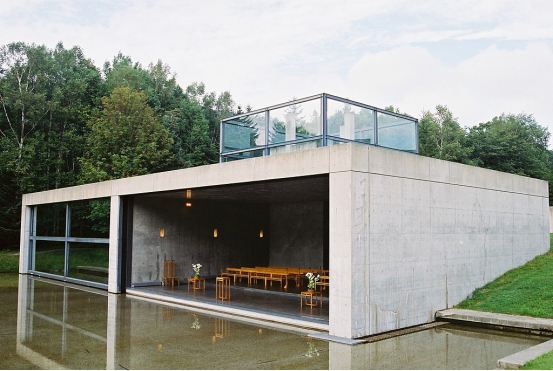
The Chapel on the Water, located in Shimukappu, Hokkaido, stands as one of the most profound examples of contemporary sacred architecture. Designed by the Pritzker Prize-winning architect Tadao Ando, the structure is more than just a place for wedding ceremonies; it is a philosophical statement on the relationship between humanity, divinity, and the natural world. By stripping away traditional religious ornamentation, Ando creates a space where the elements—water, light, and wind—become the primary conduits for spiritual reflection.
The Architectural Philosophy of Tadao Ando
At the heart of the Chapel on the Water lies Ando’s commitment to “Critical Regionalism” and the use of raw materials. Ando sought to create a “sacred space” that did not rely on traditional iconography but rather on the visceral experience of the environment.
The Concept of Zen Minimalism
Ando’s work is deeply rooted in Zen principles, emphasizing emptiness (Ma) and the beauty of the untouched. In this chapel, the “emptiness” is filled by the shifting reflections of the pond and the rustling of the nearby birch trees. This approach forces the observer to look inward, finding peace through the observation of external natural cycles.
The Role of Geometry
The structure is composed of two overlapping cubes of different sizes. The smaller cube serves as the entrance, leading visitors through a darkened, curved staircase that builds anticipation before revealing the expansive view of the water. This transition from enclosure to openness is a signature Ando technique, designed to reset the visitor’s sensory perception.

Design Elements: Concrete, Glass, and Nature
The material palette of the Chapel on the Water is intentionally limited to reinforce its minimalist aesthetic. Each material is chosen for its ability to interact with light and shadow.
Exposed Concrete: The Ando Signature
The chapel is constructed using Ando’s famous “smooth-as-silk” reinforced concrete. The walls are not painted or covered; instead, the formwork holes are left visible, creating a rhythmic pattern that highlights the human craftsmanship behind the industrial material.
The Glass Wall and the Water Surface
The most striking feature of the chapel is the massive glass wall that separates the sanctuary from the artificial pond. During the warmer months, this wall slides open, removing the physical barrier between the interior and the exterior. The cross, situated in the middle of the water, appears to float, symbolizing a bridge between the earthly and the divine.
| Material | Symbolic Function | Technical Detail |
|---|---|---|
| Reinforced Concrete | Strength and Human Presence | Smooth finish with visible tie-rod holes |
| Water | Purification and Reflection | Artificial pond designed for mirror effects |
| Glass | Transparency and Connection | Large-scale sliding mechanism for seasonal use |
| Steel | Structural Integrity | Minimalist frames for the cross and glass walls |
The Spiritual Experience: A Seasonal Transformation
Unlike traditional cathedrals that remain static, the Chapel on the Water is designed to change with the seasons of Hokkaido. This dynamism is central to the “quiet ceremony” experience.
-
Spring and Summer:
The surrounding greenery is vibrant, and the sound of water creates a rhythmic, calming atmosphere. -
Autumn:
The birch forest turns gold and orange, reflecting intense colors onto the concrete walls. -
Winter:
The pond freezes and is covered in deep snow. The chapel becomes a monochromatic sanctuary where the white landscape merges with the grey concrete.
Expert Advice: The Best Time for Photography
For those seeking to capture the chapel’s essence, the “blue hour” just after sunset is ideal. The artificial lighting within the chapel creates a warm glow that contrasts sharply with the cool tones of the water and the Hokkaido sky, emphasizing the geometric precision of the cross.
Technical Specifications and Comparison
Understanding the scale of the Chapel on the Water helps in appreciating its intimacy. It is often compared to Ando’s other religious works, such as the Church of the Light in Osaka.
Comparison: Chapel on the Water vs. Church of the Light
While the Church of the Light uses a void in the concrete to create a cross of light, the Chapel on the Water uses a physical cross placed within the landscape. The former is about the control of light in darkness, while the latter is about the total immersion into the environment.
Pro Tips for Visitors
-
Respect the Purpose:
The chapel is a functioning wedding venue. Public viewing hours are often limited to late evening or early morning. -
Silence is Mandatory:
The acoustics are designed for quiet reflection; even whispers can carry across the water. -
Check the Schedule:
Always verify the opening times with the Hoshino Resorts Tomamu, as the chapel is located on their grounds.
Frequently Asked Questions (FAQ)
-
Where is the Chapel on the Water located?
- It is located within the Hoshino Resorts Tomamu in Shimukappu, Hokkaido, Japan. It is approximately a two-hour drive or train ride from Sapporo.
-
Can anyone visit the chapel, or is it only for weddings?
- While its primary function is for weddings, the chapel is typically open to the public during specific hours in the evening (usually 20:30 to 21:30) for quiet meditation and viewing.
-
What is the significance of the water in the design?
- Water represents purification and provides a mirror-like surface that reflects the sky and trees, effectively bringing the “heavens” down to earth and expanding the visual boundaries of the small space.
-
Is the glass wall always open?
- No, the glass wall is typically opened only during the warmer months and during specific parts of the wedding ceremony, weather permitting. In winter, it remains closed to protect against the extreme Hokkaido cold.
-
What makes Tadao Ando’s concrete unique?
- Ando uses a specific recipe for concrete and high-quality wooden forms to ensure a surface that is exceptionally smooth and tactile, often described as having a “silk-like” texture.

Related Posts