Concrete and masonry stand as two of the most ancient yet enduring building materials, forming the literal bedrock of countless structures across civilizations. From the monumental aqueducts of ancient Rome to the towering skyscrapers of modern metropolises, their versatility, strength, and durability have made them indispensable. This ultimate guide will take a deep dive into the world of concrete and masonry, exploring their core components, historical evolution, diverse applications, and the strategic insights needed to leverage their full potential in contemporary construction projects. Understanding these materials is not just about knowing their physical properties; it’s about appreciating the engineering principles, the craftsmanship, and the innovative spirit that continues to shape our built environment.
Understanding Concrete: The Foundation of Modern Construction
Concrete, often hailed as the most widely used man-made material on Earth, is a composite material formed by combining a cementitious binder (most commonly Portland cement) with aggregate (fine and coarse) and water. This mixture undergoes a chemical process called hydration, where the cement reacts with water to form a paste that binds the aggregates together, hardening into a stone-like mass. Its origins can be traced back to ancient civilizations, with the Romans famously perfecting a form of concrete that allowed them to construct structures like the Pantheon, many of which still stand today. The invention of Portland cement in the 19th century revolutionized concrete production, paving the way for its ubiquitous use in modern infrastructure.
Components and Their Critical Roles
The performance of concrete is highly dependent on the quality and proportion of its constituent materials:
- Cement: Typically Portland cement, it acts as the binder. When mixed with water, it forms a paste that coats the aggregates and hardens, providing strength and durability. The type of cement influences setting time, strength development, and resistance to environmental factors.
- Aggregates: These are inert granular materials, primarily sand (fine aggregate) and gravel or crushed stone (coarse aggregate). Aggregates provide bulk, reduce shrinkage, and significantly contribute to the concrete’s strength and stability. Their size, shape, and grading are crucial for workability and final strength.
- Water: Essential for the chemical reaction with cement (hydration) and for providing workability to the mixture. The water-cement ratio is critical; too much water reduces strength, while too little can make the mix unworkable and compromise full hydration.
- Admixtures: Chemical additives used to modify the properties of fresh or hardened concrete. These can include plasticizers (improve workability), retarders (slow setting time), accelerators (speed setting time), air-entraining agents (improve freeze-thaw resistance), and superplasticizers (allow for very low water-cement ratios).
Types, Applications, and Design Considerations
Concrete is incredibly versatile, leading to the development of various types tailored for specific applications and performance requirements:
| Concrete Type | Key Characteristics | Typical Applications |
|---|---|---|
| Normal Strength | Standard mix, 2500-6000 psi | Foundations, slabs, sidewalks |
| High-Strength | >6000 psi, reduced water-cement ratio | High-rise buildings, bridges |
| Lightweight | Uses lightweight aggregates (e.g., shale, clay) | Non-load bearing walls, roof decks |
| Self-Consolidating (SCC) | Flows under its own weight, no vibration needed | Complex forms, congested rebar areas |
| Reinforced Concrete | Steel rebar embedded for tensile strength | Beams, columns, slabs, bridges |
| Precast Concrete | Manufactured off-site in controlled conditions | Architectural panels, structural components |
Design considerations for concrete include compressive strength, durability against environmental exposure (freeze-thaw, chemical attack), fire resistance, thermal properties, and aesthetic finish. Proper mix design, placement, and curing are paramount to achieving desired performance.
Pro Tips for Working with Concrete
- Accurate Water-Cement Ratio: Strictly adhere to the specified water-cement ratio. Even small deviations can significantly impact strength and durability.
- Proper Curing: Concrete gains strength through hydration, a process that requires moisture. Keep concrete moist for at least 7 days (or longer for high-strength mixes) by misting, covering with wet burlap, or applying curing compounds. This prevents surface cracking and ensures full strength development.
- Formwork Integrity: Ensure formwork is strong, watertight, and properly braced to prevent blowouts and maintain desired dimensions. Clean and oil forms for easy removal and a smooth finish.
- Vibration for Consolidation: Use mechanical vibrators to remove trapped air bubbles (honeycombing) and ensure the concrete fully fills the formwork around reinforcement. Over-vibration can lead to segregation of aggregates.
- Temperature Control: In hot weather, cool aggregates and water to prevent rapid setting. In cold weather, protect fresh concrete from freezing and use accelerators or heated materials.

Exploring Masonry: Timeless Craftsmanship and Durability
Masonry refers to the art and science of constructing structures by laying individual units (bricks, concrete blocks, stones, tiles) and binding them together with mortar. This ancient building technique has a rich history, dating back thousands of years to structures like the pyramids of Egypt and the Great Wall of China. Its enduring appeal lies in its inherent strength, thermal mass, fire resistance, and aesthetic versatility. Modern masonry continues to evolve, incorporating new materials and techniques while retaining its fundamental principles of structural integrity and craftsmanship.
Key Masonry Units and Mortar
The selection of masonry units and mortar is crucial for the performance and appearance of a masonry structure:
- Bricks: Traditionally made from clay, bricks are fired at high temperatures to achieve hardness and durability. They come in various sizes, colors, and textures, offering significant aesthetic appeal and excellent compressive strength.
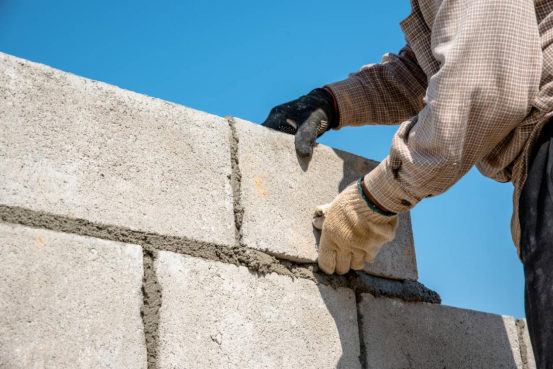
- Concrete Masonry Units (CMUs): Often referred to as concrete blocks, CMUs are manufactured from cement, aggregates, and water. They are larger than bricks, making construction faster, and can be hollow, allowing for reinforcement and insulation. CMUs are cost-effective and provide good structural performance.
- Stone: Natural stone (granite, limestone, sandstone, slate) is prized for its unique beauty, extreme durability, and timeless appeal. It can be used as rubble masonry (irregular shapes), ashlar masonry (cut and dressed stones), or veneers.
- Mortar: The binding agent for masonry units, mortar consists of cement, sand, and water, often with lime added for improved workability and flexibility. It fills the gaps between units, distributes loads evenly, and provides a weather-tight seal. Different mortar types (M, S, N, O, K) are specified based on compressive strength and application (e.g., Type M for high-strength, Type N for general use).
Masonry Construction Techniques and Reinforcement
The technique of laying masonry units significantly impacts the wall’s strength, stability, and appearance. Common bonding patterns, such as stretcher bond, running bond, and common bond, distribute loads and tie the wall together. Proper jointing (tooling the mortar joints) is essential for weather resistance and aesthetic finish.
For enhanced structural performance, especially in seismic zones or for taller structures, masonry often incorporates reinforcement. This involves embedding steel rebar (vertical and horizontal) within the hollow cores of CMUs or within specially designed cavities in brickwork, which are then filled with grout. This composite action significantly increases the masonry’s tensile and shear strength, making it more resilient to lateral forces.
Expert Advice on Masonry Projects
- Mortar Consistency is Key: Ensure mortar has the correct consistency – not too wet (weakens bond, causes slump) and not too dry (difficult to work, poor adhesion). It should be plastic enough to spread easily but stiff enough to hold the weight of the units.
- Proper Jointing: Tooling mortar joints compresses the mortar, making it denser and more resistant to water penetration. Choose a joint profile (e.g., concave, V-joint) appropriate for the climate and desired aesthetic.
- Moisture Control: Masonry can absorb water. Implement proper flashing, weep holes, and capstones to prevent water intrusion into the wall assembly, which can lead to efflorescence, freeze-thaw damage, and structural issues.
- Wall Ties and Bracing: For veneer walls or multi-wythe construction, use appropriate wall ties to connect the masonry wythes to the structural backup, ensuring stability. For tall or slender walls during construction, temporary bracing is essential.
- Expansion Joints: Masonry expands and contracts with temperature and moisture changes. Incorporate vertical and horizontal expansion joints at regular intervals and at changes in wall direction to prevent cracking.

Concrete vs. Masonry: A Comparative Analysis
While both concrete and masonry are fundamental to construction, they possess distinct characteristics that make them suitable for different applications. Understanding these differences is crucial for architects, engineers, and builders in selecting the optimal material for a given project. Both offer excellent durability and fire resistance, but their methods of construction, aesthetic qualities, and performance in specific scenarios can vary significantly.
| Feature | Concrete | Masonry |
|---|---|---|
| Form & Structure | Monolithic, poured into forms, can be precast | Assembled from individual units (bricks, blocks) with mortar |
| Flexibility/Shape | Highly adaptable, can create complex curves & shapes | Limited to unit shapes, but can create intricate patterns |
| Construction Speed | Faster for large pours; setting time required | Slower, labor-intensive, unit by unit |
| Strength (Compressive) | Very high, uniform strength | High, but depends on unit & mortar strength, and bond |
| Strength (Tensile) | Poor on its own; requires steel reinforcement | Poor on its own; requires steel reinforcement (grouted cores) |
| Thermal Mass | Excellent for energy efficiency | Excellent for energy efficiency |
| Aesthetics | Can be finished smooth, textured, stamped; utilitarian to artistic | Natural textures, patterns from unit arrangement; classic appeal |
| Cost (Materials) | Relatively low per volume | Varies widely depending on unit type (CMU vs. stone) |
| Cost (Labor) | Requires skilled labor for formwork & pouring; less for large pours | Highly labor-intensive, requires skilled masons |
| Maintenance | Low, can be sealed; repairs can be complex | Low, occasional tuckpointing for mortar joints |
Advantages and Disadvantages of Each
Choosing between concrete and masonry often comes down to specific project requirements, budget, and desired aesthetics:
- Concrete Advantages:
- Versatility: Can be cast into virtually any shape or size, allowing for architectural freedom.
- Strength & Durability: Offers high compressive strength and long service life, especially when reinforced.
- Cost-Effective: Generally more economical for large, continuous elements like foundations and slabs.
- Fire Resistance: Non-combustible, providing excellent fire protection.
- Thermal Mass: Contributes to energy efficiency by moderating indoor temperatures.
- Concrete Disadvantages:
- Tensile Weakness: Weak in tension, requiring steel reinforcement.
- Appearance: Can be seen as utilitarian unless special finishes are applied.
- Shrinkage: Prone to cracking due to drying shrinkage if not properly controlled with joints.
- Weight: Heavy material, requiring robust foundations.
- Masonry Advantages:
- Aesthetics: Wide range of colors, textures, and patterns; classic and appealing.
- Durability: Very long lifespan, resistant to weathering and pests.
- Fire Resistance: Excellent fire protection properties.
- Thermal Mass: Good for temperature regulation and energy efficiency.
- Craftsmanship: Provides a handcrafted, artisanal look.
- Masonry Disadvantages:
- Labor-Intensive: Requires skilled masons and is slower to construct than poured concrete.
- Cost: Can be more expensive than concrete, especially for brick or stone.
- Limited Flexibility: Shapes are dictated by unit size and bond patterns.
- Mortar Degradation: Mortar joints can degrade over time, requiring maintenance (tuckpointing).
- Water Penetration: If not properly detailed, mortar joints can allow water intrusion.

The Future of Concrete and Masonry in Construction
As the construction industry faces increasing demands for sustainability, efficiency, and resilience, both concrete and masonry are evolving. Innovations in material science, manufacturing processes, and construction techniques are pushing the boundaries of what these traditional materials can achieve. The focus is shifting towards reducing environmental impact, enhancing performance, and integrating smart technologies to create more adaptive and sustainable built environments.
Sustainable Practices and Innovations
The environmental footprint of concrete, particularly due to cement production, is a significant concern. However, substantial advancements are being made:
- Green Concrete: Incorporating supplementary cementitious materials (SCMs) like fly ash, slag, and silica fume reduces the need for virgin cement, lowering CO2 emissions.
- Recycled Aggregates: Using recycled concrete aggregate (RCA) from demolition waste decreases demand for virgin materials and reduces landfill waste.
- Carbon Capture: Emerging technologies aim to capture CO2 and sequester it within concrete, turning the material into a carbon sink.
- Low-Carbon Cements: Development of alternative binders and cement production methods with lower energy consumption and emissions.
Masonry is inherently sustainable due to the longevity of its structures and the use of natural or locally sourced materials. Innovations include permeable pavers for stormwater management and modular masonry systems that reduce waste and construction time.
Emerging Trends and Technologies
- 3D Printing Concrete: Additive manufacturing is revolutionizing concrete construction, enabling the rapid creation of complex geometries with minimal formwork and reduced material waste.
- Self-Healing Concrete: Incorporating bacteria or microcapsules that release healing agents when cracks appear, extending the lifespan of structures and reducing maintenance needs.
- Smart Concrete: Embedding sensors within concrete to monitor stress, temperature, and moisture levels in real-time, providing critical data for structural health monitoring and predictive maintenance.
- Modular Masonry: Prefabricated masonry panels or systems are being developed to speed up construction, improve quality control, and reduce on-site labor.
- High-Performance Masonry: Innovations in mortar and unit design are leading to masonry systems with enhanced insulation properties, improved seismic resistance, and greater aesthetic possibilities.
Frequently Asked Questions (FAQ)
- What is the primary difference between concrete and masonry?
- The primary difference lies in their form and construction method. Concrete is a monolithic, poured material that hardens into a solid mass, often reinforced with steel. Masonry, on the other hand, is built by carefully laying individual units (like bricks, blocks, or stones) and binding them together with mortar to form a composite structure.
- Which material is more environmentally friendly, concrete or masonry?
- Both materials have environmental considerations. Traditional concrete production (cement manufacturing) is energy-intensive and produces CO2. However, innovations like green concrete (using SCMs and recycled aggregates) are reducing its impact. Masonry, especially with locally sourced units, can be highly sustainable due to its longevity and thermal mass properties. The overall environmental friendliness depends heavily on specific material compositions, sourcing, and construction practices.
- Can concrete or masonry be used for DIY projects?
- Yes, both can be used for DIY projects, but with varying degrees of complexity. Smaller concrete projects like patios, garden paths, or stepping stones are manageable for DIYers with proper guidance. Basic masonry projects like garden walls or small BBQ pits can also be done. However, for structural elements, load-bearing walls, or complex designs, professional expertise is highly recommended due to the critical importance of proper mix ratios, structural integrity, and safety.
- How do concrete and masonry perform in different climates?
- Both materials offer excellent thermal mass, which helps regulate indoor temperatures in both hot and cold climates. In cold climates with freeze-thaw cycles, air-entrained concrete and durable, low-absorption masonry units with appropriate mortar are crucial to prevent damage. In hot climates, their ability to absorb and slowly release heat can reduce cooling loads. Proper design, including moisture management and expansion joints, is key for optimal performance in any climate.
- What are common maintenance requirements for concrete and masonry?
- Both materials are relatively low maintenance. For concrete, regular cleaning, sealing (especially for driveways or high-traffic areas), and prompt repair of cracks are common. For masonry, maintenance primarily involves inspecting and repairing mortar joints (tuckpointing) when they show signs of deterioration, cleaning surfaces, and ensuring proper drainage and flashing to prevent moisture problems. Both materials benefit from protection against harsh chemicals and abrasive cleaning methods.

Related Posts