Introduction: The Crucible of Conflict – Antietam and Gettysburg
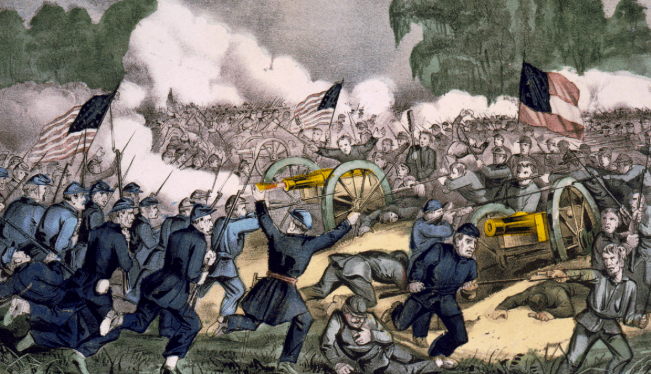
The American Civil War, a period of immense strife and national division from 1861 to 1865, witnessed countless skirmishes and major engagements, each contributing to the brutal tapestry of the conflict. However, two battles stand out not just for their sheer scale of violence, but for their profound and irreversible impact on the war’s trajectory: the Battle of Antietam and the Battle of Gettysburg. These were not merely clashes of armies; they were crucibles where the very future of the United States was forged through blood, sacrifice, and strategic brilliance, or sometimes, tragic miscalculation. Understanding these two events is crucial to grasping how the Union ultimately prevailed and how the nation was irrevocably transformed.
The Stakes of the Civil War
By 1862, the Confederacy, emboldened by early victories, sought to gain international recognition and demoralize the Union. The Union, conversely, struggled to find a decisive military advantage that could quell the rebellion. The battles of Antietam and Gettysburg occurred at critical junctures, each offering a chance for a definitive shift in momentum. They represented desperate gambits and staunch defenses, shaping public opinion, influencing foreign policy, and ultimately dictating the course of military campaigns for years to come. This comprehensive guide will dissect these pivotal moments, examining their origins, key events, and the far-reaching consequences that continue to resonate in American history.
The Battle of Antietam: America’s Bloodiest Single Day
Fought on September 17, 1862, near Sharpsburg, Maryland, the Battle of Antietam (also known as the Battle of Sharpsburg in the South) holds the grim distinction of being the bloodiest single-day battle in American history. It marked the culmination of Confederate General Robert E. Lee’s ambitious Maryland Campaign, a bold offensive designed to carry the war into Union territory, gain new recruits, and potentially influence the upcoming congressional elections and European diplomatic support for the Confederacy.
Lee’s Maryland Campaign and the Lost Order
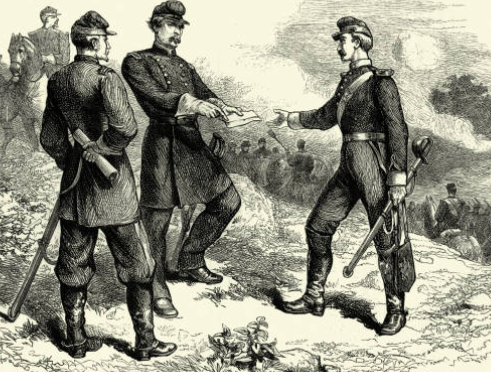
General Lee, after his decisive victory at the Second Battle of Bull Run, aimed to relieve pressure on war-torn Virginia, gather supplies from Maryland, and spark an uprising among pro-Confederate elements in the state. His plan, however, suffered a critical setback when a copy of his Special Order No. 191, detailing the division of his army, was discovered by Union soldiers. This intelligence, famously dubbed the “Lost Order,” fell into the hands of Union Major General George B. McClellan, providing him with an unprecedented opportunity to strike Lee’s divided forces. Despite this intelligence advantage, McClellan’s characteristic caution and slow movements allowed Lee time to consolidate his scattered units along Antietam Creek.
Key Engagements and Unrelenting Carnage
The battle unfolded in three major phases, moving from north to south across the battlefield:
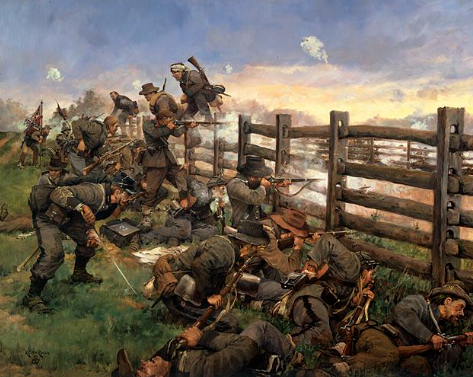
- The Cornfield and Miller’s Farm: The fighting began at dawn in a cornfield, where Union I Corps under Major General Joseph Hooker launched an assault on Confederate positions. The struggle for this area, marked by relentless charges and counter-charges, saw some of the most concentrated fighting of the day. Wave after wave of Union troops faced off against Confederate lines, resulting in horrific casualties for both sides.
- The Sunken Road (Bloody Lane): Later in the morning, the fighting shifted to a sunken farm road, defended by Confederate troops. Union II Corps, led by Major General Edwin V. Sumner, launched repeated attacks. The road, acting as a natural trench, offered temporary protection but eventually became a death trap. The intense fire from both sides turned the lane into a gruesome spectacle, earning it the moniker “Bloody Lane.” After hours of savage fighting, Union forces finally broke through, threatening to split Lee’s army in two.
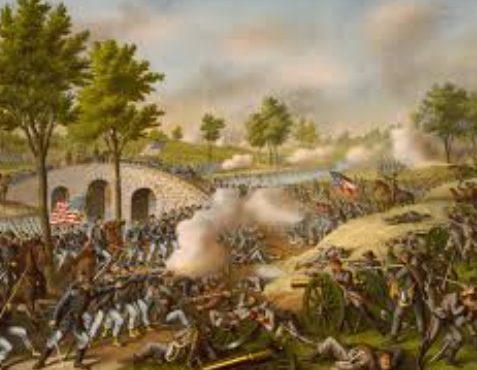
- Burnside’s Bridge: In the afternoon, the battle moved to the southern flank, where Union IX Corps, commanded by Major General Ambrose Burnside, struggled for hours to cross a stone bridge over Antietam Creek. Despite repeated orders, Burnside’s delay in crossing allowed Confederate General A.P. Hill’s division, arriving from Harpers Ferry, to launch a timely counterattack that prevented the Union from outflanking Lee’s right and potentially destroying his army.
Casualties and Strategic Aftermath
By dusk, the battlefield was littered with approximately 23,000 casualties (killed, wounded, or missing) from both sides, making it the deadliest single day in American military history. Despite not being a decisive tactical victory for either side—Lee’s army remained intact, and McClellan failed to pursue aggressively—Antietam proved to be a critical strategic turning point. Lee’s invasion of Maryland was repelled, and the Confederacy’s hopes for foreign intervention diminished significantly. More importantly, the Union “victory” provided President Abraham Lincoln with the political leverage he needed to issue the Emancipation Proclamation on September 22, 1862. This transformative decree declared all enslaved people in Confederate states to be free, fundamentally changing the war’s objective from preserving the Union to also abolishing slavery, thereby strengthening the moral cause of the Union and deterring European powers from supporting the Confederacy.
The Battle of Gettysburg: Three Days That Defined a Nation
Ten months after Antietam, the Battle of Gettysburg, fought from July 1 to July 3, 1863, in and around Gettysburg, Pennsylvania, delivered another monumental blow to the Confederacy and is widely regarded as the war’s ultimate turning point. It marked General Lee’s second and final attempt to invade the North, aiming to relieve pressure on Vicksburg, Mississippi, capture a major Northern city, and force the Union to negotiate peace.
Prelude to Conflict and Initial Clashes
Lee’s Army of Northern Virginia, confident after its victory at Chancellorsville, moved into Pennsylvania. Union Major General George G. Meade, newly appointed commander of the Army of the Potomac, pursued. The battle began somewhat accidentally on July 1 when Confederate infantry, searching for supplies, encountered Union cavalry west of Gettysburg. What started as a skirmish quickly escalated into a full-scale battle, with both sides rushing reinforcements to the small town. By the end of the first day, Union forces were pushed back through Gettysburg, establishing defensive positions along Cemetery Hill and Cemetery Ridge, forming a strong fishhook-shaped line that would prove crucial.
Day 2: Fierce Fights for the Flanks
July 2 witnessed some of the most desperate and iconic fighting of the entire war. Lee ordered attacks on both Union flanks, hoping to break their defensive line. On the Union left, Confederate assaults raged through the Peach Orchard, the Wheatfield, Devil’s Den, and most critically, Little Round Top. The heroic defense of Little Round Top by regiments like the 20th Maine, under Colonel Joshua Lawrence Chamberlain, prevented the Confederates from turning the Union flank, a move that could have been catastrophic. On the Union right, fierce fighting occurred at Culp’s Hill and East Cemetery Hill, with Union forces barely holding their ground against determined Confederate charges. Despite heavy losses, the Union line held firm, largely due to strong leadership and tenacious defense.
Day 3: Pickett’s Charge and the Confederate High-Water Mark
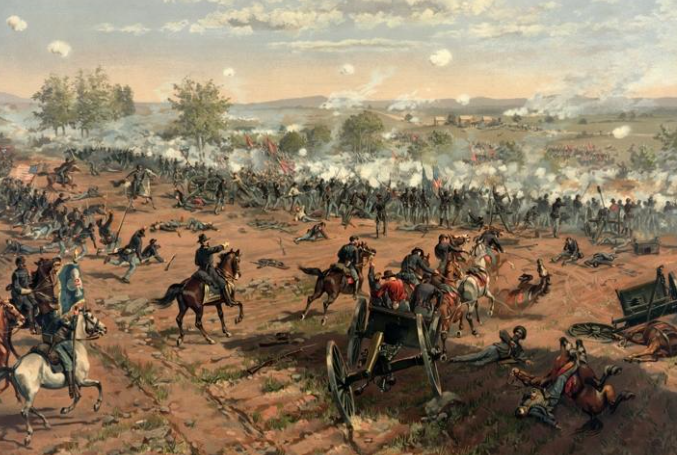
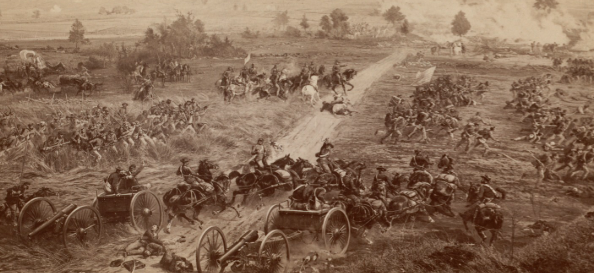
The final day of the battle, July 3, began with renewed fighting on Culp’s Hill. However, the day’s defining moment was Pickett’s Charge. Following a massive, two-hour artillery bombardment—the largest of the war—about 12,500 Confederate soldiers, led by Major General George Pickett, launched a desperate frontal assault across open fields towards the center of the Union line on Cemetery Ridge. The charge was a catastrophic failure. Union artillery and infantry fire decimated the advancing Confederates, who faced a barrage of shot, shell, and musket fire. Only a small fraction reached the Union lines, briefly breaching them at a point known as “The Angle,” before being repulsed. The charge resulted in devastating Confederate casualties, effectively ending Lee’s offensive capabilities and forcing his retreat from Pennsylvania.
Consequences and the Gettysburg Address
Gettysburg was the largest battle ever fought in North America, with an estimated 51,000 casualties on both sides. It represented a crushing defeat for the Confederacy and marked the “high-water mark” of the Confederacy, from which it never fully recovered. Lee’s army was severely crippled, and the strategic initiative permanently shifted to the Union. Four months later, President Lincoln delivered his immortal Gettysburg Address at the dedication of the Soldiers’ National Cemetery, transforming the battle from a military victory into a profound statement on the principles of liberty, equality, and a “new birth of freedom” for the nation, ensuring that the sacrifices made were not in vain.
Strategic Crossroads: Comparing Antietam and Gettysburg
While both Antietam and Gettysburg are recognized as pivotal turning points, their contexts, immediate outcomes, and long-term implications presented distinct strategic crossroads for the Union and Confederacy. A comparative analysis highlights their unique contributions to the eventual Union victory.
Objectives and Outcomes of the Campaigns
The primary objective of Lee’s Maryland Campaign culminating in Antietam was to achieve a decisive victory on Union soil that would garner European recognition for the Confederacy and potentially shift Northern public opinion against the war. The outcome, though a tactical draw, was a strategic Union victory because Lee’s invasion was repelled, and the Union retained the initiative. Gettysburg, similarly, was an offensive thrust into the North, but with a more desperate underlying tone. Lee sought to disrupt Union war efforts, draw Union forces away from Vicksburg, and potentially threaten Washington D.C. The outcome was an undeniable Union victory, permanently ending the Confederacy’s ability to wage offensive campaigns in the North.
Leadership and Tactical Deployments
At Antietam, McClellan’s cautious leadership prevented a decisive Union victory, despite having Lee’s battle plans. His failure to commit his full reserve forces allowed Lee to extract his army. Conversely, Lee’s tactical choices, while bold, also contributed to his difficulties, particularly the division of his forces. At Gettysburg, General Meade’s defensive acumen proved critical, particularly on Day 2, where Union forces held strong defensive positions against fierce assaults. Lee’s decision to launch Pickett’s Charge on Day 3, a desperate frontal assault against a well-entrenched enemy, is often cited as one of the war’s most costly tactical errors, demonstrating a significant departure from his usual strategic brilliance.
Political and Social Ramifications
Antietam’s most profound political consequence was providing Lincoln with the necessary justification for the Emancipation Proclamation, transforming the war’s moral and political landscape. This move also solidified the Union’s position against foreign intervention. Gettysburg reinforced this shift. The victory, coupled with the fall of Vicksburg the following day, severely crippled Confederate morale and military strength, making a Confederate victory—or even a negotiated peace on their terms—increasingly improbable. Lincoln’s Gettysburg Address further cemented the ideological purpose of the war, reframing it as a fight for freedom and the preservation of democratic ideals.
| Feature | Battle of Antietam (Sept 1862) | Battle of Gettysburg (July 1863) |
|---|---|---|
| Location | Sharpsburg, Maryland | Gettysburg, Pennsylvania |
| Commanders (Union) | George B. McClellan | George G. Meade |
| Commanders (Confederate) | Robert E. Lee | Robert E. Lee |
| Casualties (Approx.) | 23,000 (single day) | 51,000 (three days) |
| Strategic Outcome | Union strategic victory (Lee’s invasion repelled) | Decisive Union victory (Confederate offensive capability crippled) |
| Key Turning Point For | Emancipation Proclamation | Confederate “High-Water Mark,” end of Northern invasions |
Architects of Destiny: Key Figures at Antietam and Gettysburg
The outcomes of Antietam and Gettysburg were not solely determined by grand strategies or troop movements, but also by the decisions, courage, and sometimes failings of the men who led them. The personal dynamics and leadership styles of key commanders played an indispensable role in shaping these historic battles.
Union Commanders and Their Impact
- Major General George B. McClellan (Antietam): Known for his meticulous organization and ability to train the Army of the Potomac, McClellan was also famously cautious. Despite possessing Lee’s battle plans, his slow pursuit and reluctance to commit his full reserves prevented a more decisive Union victory at Antietam. His hesitation ultimately led to his removal from command by Lincoln.
- Major General George G. Meade (Gettysburg): Appointed to command the Army of the Potomac just days before Gettysburg, Meade proved to be a capable defensive commander. His effective deployment of forces on strong defensive ground and his ability to counter Lee’s assaults, particularly on Day 2, were crucial to the Union victory. Though criticized for not pursuing Lee more aggressively, his performance at Gettysburg was commendable under immense pressure.
- Major General Joseph Hooker (Antietam): Led the Union I Corps at Antietam, initiating the fighting in the Cornfield. His aggressive tactics characterized the early phase of the battle, though he was wounded during the day.
- Colonel Joshua Lawrence Chamberlain (Gettysburg): A professor turned soldier, Chamberlain’s heroic defense of Little Round Top with the 20th Maine is one of the most celebrated acts of the battle. His desperate bayonet charge, when his regiment ran out of ammunition, successfully repelled a Confederate assault and saved the Union flank.
Confederate Commanders and Their Challenges
- General Robert E. Lee (Antietam & Gettysburg): Lee’s strategic genius was evident in his audacious Maryland Campaign and his ability to maneuver his army. However, at Antietam, his gamble was checked, and at Gettysburg, his overconfidence and tactical misjudgments, particularly the execution of Pickett’s Charge, led to a devastating defeat. Despite these setbacks, his ability to inspire his troops remained legendary.
- Major General Thomas “Stonewall” Jackson (Antietam): A brilliant and aggressive subordinate commander, Jackson’s forces played a critical role in Lee’s Maryland Campaign, including the capture of Harpers Ferry. His disciplined troops were vital in holding key positions at Antietam, though he was not as prominently involved in the main assaults of the single day.
- Lieutenant General James Longstreet (Gettysburg): Lee’s “Old War Horse” and principal subordinate, Longstreet favored a defensive strategy at Gettysburg, advocating for a flanking movement rather than a frontal assault. His reservations about Pickett’s Charge were well-documented, and his defensive tactics often contrasted with Lee’s more aggressive inclinations, particularly during the latter stages of the war.
- Major General A.P. Hill (Antietam & Gettysburg): Hill’s division famously arrived on the Antietam battlefield at the critical moment, launching a counterattack that saved Lee’s right flank. At Gettysburg, his corps was heavily engaged on Day 1, initiating the battle, and played a significant role throughout the three days.
Beyond the Battlefield: The Lasting Legacy of Antietam and Gettysburg
The impact of Antietam and Gettysburg extended far beyond the immediate military outcomes, profoundly shaping the course of the American Civil War and the future of the United States. These battles left an indelible mark on military strategy, political policy, and the national consciousness, contributing to a transformed nation.
Military Strategy and Evolution
These battles showcased the brutal reality of modern warfare, characterized by massed infantry assaults against entrenched positions and improved weaponry. Antietam, with its horrific casualty count, underscored the need for better battlefield medicine and logistics. Gettysburg, particularly Pickett’s Charge, served as a stark lesson in the futility of frontal assaults against a well-prepared enemy, influencing future military tactics to favor flanking maneuvers and combined arms approaches. The sheer scale of the engagements also pushed the limits of command and control, highlighting the challenges of coordinating large armies over vast and complex terrains.
Political Transformation and National Identity
- Emancipation and Moral Purpose: Antietam provided the crucial impetus for the Emancipation Proclamation, which fundamentally changed the war from a conflict about preserving the Union to one about human freedom. This shift not only garnered moral support for the Union cause internationally but also transformed the national identity, challenging the very foundation of slavery that had divided the nation.
- Preservation of the Union: Gettysburg definitively crushed the Confederacy’s last major offensive push into the North. Coupled with the fall of Vicksburg, it signaled the beginning of the end for the Confederacy, ensuring the Union’s eventual preservation. The idea of a single, indivisible nation, articulated so powerfully in Lincoln’s Gettysburg Address, became a cornerstone of American identity.
- Reconstruction Era Precedent: The outcomes of these battles, particularly the Emancipation Proclamation, laid the groundwork for the Reconstruction Era. The questions of civil rights, citizenship for formerly enslaved people, and the reintegration of Southern states were directly influenced by the moral and political victories achieved in the wake of these pivotal engagements.
Memory, Memorialization, and Collective Consciousness
Today, the battlefields of Antietam and Gettysburg are preserved as National Military Parks, serving as solemn reminders of the immense sacrifices made. They are sites of pilgrimage, education, and reflection, drawing millions of visitors annually. The monuments, markers, and preserved landscapes tell stories of heroism, tragedy, and the profound cost of national division. These sites contribute significantly to America’s collective memory, ensuring that the lessons learned from these bloody conflicts—lessons of unity, freedom, and the enduring struggle for a more perfect Union—are never forgotten.
Conclusion: Echoes of Valor and Nation’s Rebirth
The Battles of Antietam and Gettysburg stand as monumental pillars in the narrative of the American Civil War, each a testament to the ferocity of the conflict and the profound stakes involved. Antietam, a single day of unparalleled bloodshed, halted the Confederate advance into the North and provided the critical juncture for President Lincoln to issue the Emancipation Proclamation, forever changing the war’s moral compass. Gettysburg, a three-day epic of courage and sacrifice, definitively turned the tide against the Confederacy, shattering its offensive capabilities and ensuring the ultimate preservation of the Union. Together, these battles represent the crucible in which a fragmented nation was painfully, yet powerfully, reborn.
From the cornfields of Sharpsburg to the rocky slopes of Little Round Top and the open fields of Pickett’s Charge, countless acts of bravery and despair unfolded, shaping not only military outcomes but also the very soul of America. The lessons from these engagements—about leadership, strategy, human resilience, and the devastating cost of division—continue to resonate, reminding us of the enduring struggle for liberty and equality that defined the Civil War. As we reflect on these pivotal moments, we honor the sacrifices made and reaffirm the principles for which a nation fought and ultimately reunited.
Frequently Asked Questions (FAQ)
- Q1: Why are Antietam and Gettysburg considered the most significant turning points of the Civil War?
- Antietam is significant because it ended Confederate General Robert E. Lee’s first invasion of the North, preventing potential foreign intervention for the Confederacy. More importantly, it provided President Lincoln with the opportune moment to issue the Emancipation Proclamation, transforming the war into a fight against slavery. Gettysburg is considered the ultimate turning point as it was Lee’s second and final attempt to invade the North, resulting in a decisive Union victory that crippled the Army of Northern Virginia and permanently shifted the strategic initiative to the Union, making a Confederate victory virtually impossible.
- Q2: What was the “Lost Order” at Antietam and how did it impact the battle?
- The “Lost Order” refers to Confederate Special Order No. 191, a copy of which was discovered by Union soldiers before the Battle of Antietam. This order detailed General Lee’s plans to divide his army, giving Union Major General George B. McClellan a critical intelligence advantage. While McClellan’s characteristic caution prevented him from fully exploiting this intelligence, it did allow him to position his forces to meet Lee’s divided army, preventing a more devastating Confederate offensive and contributing to Lee’s retreat.
- Q3: What was Pickett’s Charge and why was it so disastrous for the Confederacy?
- Pickett’s Charge was a massive frontal assault by approximately 12,500 Confederate infantrymen on the third day of the Battle of Gettysburg. After a two-hour artillery barrage, the Confederates marched nearly a mile across open ground towards the well-entrenched Union center on Cemetery Ridge. The charge was disastrous because Union artillery and infantry fire decimated the advancing lines, resulting in overwhelming casualties (over 50% losses for the Confederates involved). It failed to break the Union line and effectively ended Lee’s ability to conduct offensive operations in the North, marking the “high-water mark” of the Confederacy.
- Q4: How did the Emancipation Proclamation, issued after Antietam, change the nature of the Civil War?
- The Emancipation Proclamation, issued by President Lincoln on September 22, 1862, following the Battle of Antietam, fundamentally transformed the nature and purpose of the Civil War. It declared all enslaved people in Confederate states to be free, shifting the Union’s war aim from solely preserving the Union to also abolishing slavery. This move had profound impacts: it discouraged European powers (like Britain and France) from supporting the Confederacy, encouraged enslaved people to flee to Union lines, and added a powerful moral imperative to the Union cause, galvanizing abolitionist support.
- Q5: What is the enduring legacy of Gettysburg in American history?
- The enduring legacy of Gettysburg is multifaceted. Militarily, it marked the decisive end of Confederate incursions into the North. Politically, President Lincoln’s Gettysburg Address, delivered four months after the battle, redefined the purpose of the war, framing it as a fight for liberty, equality, and a “new birth of freedom,” rather than just the preservation of the Union. Culturally, Gettysburg became a powerful symbol of national unity and sacrifice, a place where the foundational ideals of the United States were tested and reaffirmed, solidifying the
Historical context note: This article is informational history and global-affairs commentary. It does not provide tactical instruction, weapons guidance, operational planning, extremist support, political campaigning, legal advice, or endorsement of violence. Conflict, nuclear, atrocity, and geopolitical topics should be read with source awareness, date context, and care for affected communities.

Related Posts