World War II was not won in a single day, nor was it defined by a single battlefield. It was a sprawling, multi-continental conflict that hinged on a series of critical turning points. These pivotal moments—ranging from the frozen steppes of the Soviet Union to the sun-baked deserts of North Africa, and the treacherous beaches of Northern France—fundamentally altered the trajectory of the war. Understanding these battles requires moving beyond simple dates and casualty figures; it demands a rigorous analysis of the tactical innovations, logistical miracles, and strategic blunders that ultimately shifted the balance of power from the Axis forces to the Allies. This comprehensive pillar guide systematically deconstructs the most significant military campaigns of the Second World War, offering an unprecedented look into the anatomy of global warfare.
The Attack on Pearl Harbor: Igniting a Global Conflict
Prior to December 7, 1941, the Second World War was primarily a Eurasian and African conflict. The United States, insulated by two oceans and a strong isolationist political climate, remained an industrial supplier rather than a direct combatant. This paradigm was shattered in a matter of hours when the Imperial Japanese Navy launched a meticulously planned surprise offensive against the U.S. Pacific Fleet anchored at Pearl Harbor, Hawaii. This audacious strike not only dragged the United States into the war but permanently unified the Pacific and European theaters into a single, global struggle.
Strategic Context and the Element of Surprise
The strategic calculus behind Japan’s attack was born of desperation and imperial ambition. Facing crippling American oil embargoes that threatened to stall their war machine in China, Japanese high command, led by Admiral Isoroku Yamamoto, devised a high-risk gamble. The objective was not to conquer the United States, but to deliver a preemptive, paralyzing blow to the U.S. Pacific Fleet. By buying six to twelve months of uncontested naval supremacy, Japan aimed to conquer the resource-rich Dutch East Indies and Malaya, subsequently forcing a demoralized America to negotiate a peace treaty. The execution of this plan relied entirely on absolute secrecy and the projection of naval air power over an unprecedented distance of 3,400 miles.
The tactical execution involved a devastating combination of assets:
- The Kido Butai: A massive strike force comprising six aircraft carriers, representing the most potent concentration of naval air power the world had ever seen at that time.
- Technological Modifications: Japanese engineers brilliantly modified Type 91 torpedoes with wooden fins, allowing them to be dropped into the unusually shallow (45-foot) waters of Pearl Harbor without burying themselves in the mud.
- Intelligence Failures: A combination of ignored radar warnings at Opana Point, misconstrued diplomatic cables, and an underestimation of Japanese capabilities created the perfect storm for American unreadiness.
While the tactical execution was nearly flawless, resulting in the sinking or damaging of eight U.S. battleships and the loss of over 2,400 American lives, the strategic outcome was a catastrophic miscalculation for Japan. The vital American aircraft carriers were at sea, and the base’s submarine pens and fuel storage facilities were left largely intact, ensuring the U.S. Navy could rapidly recover and project power.
The Immediate Aftermath and America’s Entry
The psychological impact of Pearl Harbor was the exact opposite of what Yamamoto had intended. Instead of demoralizing the American public, it galvanized a fractured nation into a unified powerhouse of industrial and military resolve. The immediate declaration of war on Japan was swiftly followed by Nazi Germany and Fascist Italy declaring war on the United States, officially linking the European and Pacific conflicts. The “sleeping giant” was awakened, and the immense industrial capacity of the United States was entirely repurposed for total war, setting the stage for the eventual overwhelming of Axis forces on multiple fronts.
The Battle of Britain: Aerial Supremacy and the Defense of Europe
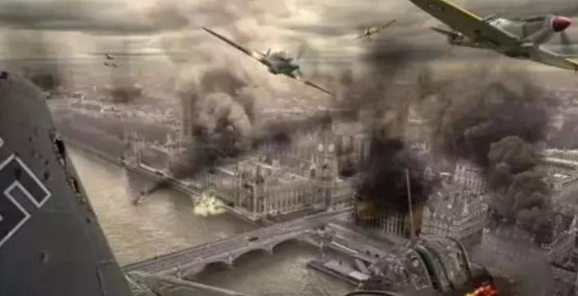
In the summer of 1940, the geopolitical landscape of Europe was dire. Following the rapid collapse of France and the miraculous but desperate evacuation at Dunkirk, Great Britain stood entirely alone against the seemingly invincible Nazi war machine. Adolf Hitler’s directive for the invasion of the British Isles, codenamed Operation Sea Lion, was contingent upon one absolute prerequisite: the total eradication of the Royal Air Force (RAF) to secure air superiority over the English Channel. The ensuing Battle of Britain became the first major military campaign in history fought entirely by air forces, and its outcome fundamentally altered the course of the European war.
The Luftwaffe vs. The Royal Air Force
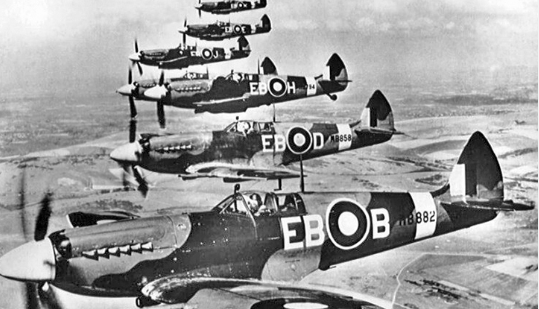
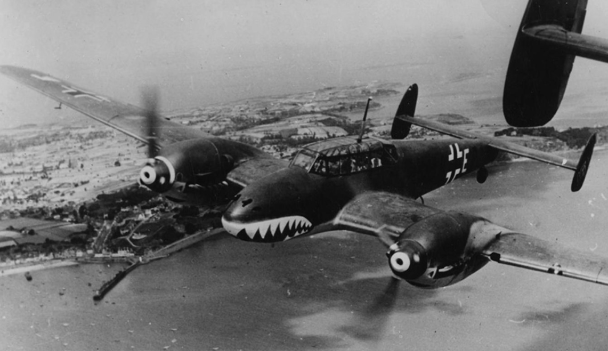
The German Luftwaffe, commanded by Hermann Göring, entered the battle with a massive numerical advantage and combat-hardened pilots fresh from victories in Poland and France. Their initial strategy focused on a systematic dismantling of British coastal convoys, radar stations, and forward airfields. However, the RAF, under the meticulous leadership of Air Chief Marshal Hugh Dowding, possessed critical advantages that offset their numerical inferiority. The British utilized the Supermarine Spitfire and the Hawker Hurricane—two of the most advanced fighter aircraft of the era. The Hurricane bore the brunt of the bomber interceptions, while the faster, more agile Spitfire was tasked with engaging the deadly German Messerschmitt Bf 109 fighter escorts.
Radar Technology and the Dowding System
The true unsung hero of the Battle of Britain was not just the aircraft, but the revolutionary integrated air defense network known as the Dowding System. This sophisticated command and control infrastructure prevented the RAF from needlessly exhausting its limited resources in continuous patrols.
- Chain Home Radar: A ring of early warning radar stations along the coast could detect incoming Luftwaffe formations while they were still assembling over France, providing critical altitude and bearing data.
- Observer Corps: Once German planes crossed the coastline and dropped below radar coverage, thousands of ground observers tracked their movements visually and acoustically, relaying real-time updates.
- Fighter Command Operations: Information was centralized in specialized filter rooms, allowing commanders to scramble exact numbers of fighter squadrons to precise interception points just in time, maximizing fuel efficiency and combat effectiveness.
Frustrated by mounting losses and a failure to break the RAF, the Luftwaffe drastically shifted its strategy in September 1940, turning its bombers away from military targets and toward the terror bombing of London and other cities—a phase known as the Blitz. While devastating to civilian populations, this fatal strategic error gave RAF Fighter Command the vital breathing room it needed to repair airfields and replenish pilot ranks. By late October, Hitler indefinitely postponed Operation Sea Lion, marking Nazi Germany’s first major strategic defeat and ensuring Britain would survive as an unsinkable aircraft carrier for the eventual liberation of Europe.
Operation Barbarossa and the Battle of Moscow: The Eastern Front Opens
Having failed to subdue Great Britain, Hitler turned his gaze toward his ultimate ideological and territorial objective: the Soviet Union. On June 22, 1941, Nazi Germany launched Operation Barbarossa, the largest land invasion in human history. Over three million Axis troops, thousands of tanks, and massive air support surged across the Soviet border in a colossal display of Blitzkrieg (lightning war) tactics. The initial success of this reckless eastward thrust was staggering, but it ultimately led to the brutal attrition of the Eastern Front and the decisive Battle of Moscow, which shattered the myth of German invincibility.
The Reckless Blitzkrieg Eastward
Operation Barbarossa was predicated on the assumption that the Soviet Union was a “rotten structure” that would collapse after a single, massive kick. The invasion was divided into three massive Army Groups: North targeting Leningrad, Center driving toward Moscow, and South aiming for the agricultural and oil-rich regions of Ukraine and the Caucasus. In the opening months, the Wehrmacht achieved astonishing encirclements at Minsk, Smolensk, and Kiev, capturing millions of Soviet prisoners and destroying the bulk of the pre-war Red Army. However, the sheer geographical vastness of Russia, combined with a severe underestimation of Soviet reserve mobilization capabilities, began to stretch German logistics to a breaking point.
The blitzkrieg relied on paved roads and rapid supply lines, neither of which existed in abundance in the Soviet interior. As autumn arrived, the dreaded Rasputitsa—the mud season—turned unpaved Russian roads into impassable bogs, severely slowing the advance of German Panzer divisions and giving the Soviet high command critical time to organize a desperate defense of their capital.
General Winter and the Soviet Counterattack
By late November 1941, the vanguard of Army Group Center had reached the freezing outskirts of Moscow, with some units close enough to see the spires of the Kremlin through their binoculars. However, the German military machine had ground to a halt. Plagued by overextended supply lines, exhausted troops, and a catastrophic lack of winter clothing and specialized cold-weather lubricants for their weapons and vehicles, the Wehrmacht was highly vulnerable. The temperature plummeted to record lows, freezing engines solid and causing widespread frostbite.
Capitalizing on this vulnerability, General Georgy Zhukov launched a massive, unexpected winter counter-offensive on December 5, 1941. He utilized fresh, winter-hardened Siberian divisions—transferred from the Far East after Soviet intelligence confirmed Japan would not attack the USSR. The shock of the Soviet assault drove the freezing, depleted German forces back 100 to 250 kilometers from the capital. The Battle of Moscow was a monumental turning point; it marked the first time the German army was forced into a major retreat, definitively ending the prospect of a quick victory in the East and condemning Germany to a protracted, multi-year war of attrition it could not ultimately win.
The Battle of El Alamein: Turning the Tide in North Africa
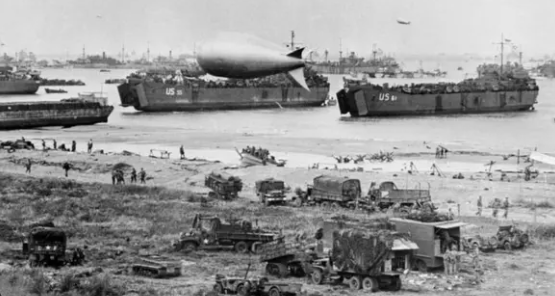
While the monumental struggles of the Eastern Front consumed millions of lives, a fundamentally different type of war was being waged in the harsh, unforgiving environment of North Africa. The North African campaign was a critical strategic theater; control over it meant dominion over the Mediterranean Sea, access to the vital Suez Canal, and a gateway to the oil fields of the Middle East. The climax of this desert war occurred in late 1942 at a desolate railway stop in Egypt called El Alamein, where the British Eighth Army clashed with the legendary Afrika Korps.
Desert Warfare and Supply Chain Logistics
Warfare in the North African desert was often compared to naval warfare. There were few natural defensive positions, and vast armored formations maneuvered across the open sands like fleets at sea. In this environment, logistics and supply lines dictated the tempo of operations more than any other factor. The “Desert Fox,” German Field Marshal Erwin Rommel, was a master of mobile, aggressive armored warfare, repeatedly outflanking Allied forces. However, his very success was his undoing; the further he advanced into Egypt, the more dangerously extended his supply lines stretching back to Tripoli became. Conversely, the British forces, pushed back toward their primary supply bases in Alexandria and Cairo, grew stronger by the day.
The logistical disparities were profound and ultimately decisive:
- Allied Supply Dominance: The British Eighth Army benefited from a massive influx of American-supplied equipment, most notably the M4 Sherman tank, which outclassed the majority of German armor in theater. Allied naval and air superiority in the Mediterranean also allowed them to systematically sink Axis supply ships, starving Rommel of critical fuel and ammunition.
- Axis Attrition: Rommel’s forces were operating on a shoestring logistical budget. Without adequate fuel, his highly mobile Panzer divisions were rendered static and vulnerable, stripping away his primary tactical advantage.
Montgomery’s Tactical Masterclass
Under the command of General Bernard Montgomery, the British Eighth Army abandoned the chaotic, piecemeal armored charges that had previously characterized Allied desert tactics. Montgomery meticulously planned a set-piece battle, Operation Lightfoot, relying on overwhelming artillery superiority, massive minefield clearance operations, and infantry-led assaults to breach the Axis defenses before committing his armor. Beginning on October 23, 1942, a deafening artillery barrage heralded the start of the Second Battle of El Alamein. Over twelve days of brutal, grinding combat, Montgomery systematically chewed through the Axis defenses. Lacking the fuel to maneuver or retreat effectively, Rommel’s forces were decisively shattered. This victory permanently ended the Axis threat to Egypt and the Suez Canal, paving the way for the total expulsion of Axis forces from North Africa and the subsequent Allied invasion of Italy.

The Battle of Kursk: The Largest Tank Duel in Human History
Following their catastrophic defeat at Stalingrad in early 1943, the German High Command desperately needed a decisive victory on the Eastern Front to regain the strategic initiative. They focused their attention on the Kursk salient, a massive bulge in the Soviet lines extending westward. Hitler authorized Operation Citadel, a massive pincer movement designed to encircle and annihilate the Soviet forces within the salient. What resulted in July 1943 was the Battle of Kursk, a clash of industrial and military titans that stands as the largest tank battle in human history, fundamentally breaking the offensive capability of the German Wehrmacht.
Operation Citadel and Soviet Defensive Depth
Unlike the surprise attacks of the early war, Operation Citadel was one of the worst-kept secrets in military history. Thanks to the British Ultra codebreakers and the Soviet “Lucy” spy ring, the Red Army high command (Stavka) knew the exact timing, locations, and objectives of the German offensive months in advance. Rather than launch a preemptive strike, Soviet leadership, guided by Marshal Zhukov, made the brilliant strategic decision to absorb the German blow utilizing a defense-in-depth strategy, and then launch a massive counter-offensive once the enemy was exhausted.
The scale of the Soviet defensive preparations was staggering. Hundreds of thousands of civilians and soldiers constructed multiple concentric rings of defense extending over 150 miles deep. These defenses included:
- Pakfronts: Interlocking networks of concealed anti-tank guns designed to catch advancing German armor in lethal crossfires.
- Minefields: Over a million anti-tank and anti-personnel mines were laid at a density of up to 4,000 mines per mile of front.
- Trench Networks: Thousands of miles of deeply dug trenches protected infantry from artillery and tank treads, allowing them to separate German infantry from their supporting armor.
Armor Tactics and the Decisive Clash at Prokhorovka
When the German offensive finally launched on July 5, 1943, it featured advanced new armor, including the heavily armored Tiger and Panther tanks, and the massive Ferdinand tank destroyers. However, these vehicles were plagued by mechanical unreliability and found themselves bogged down in the dense Soviet minefields and subjected to relentless artillery barrages. The German northern pincer stalled almost immediately, advancing only a few miles before being halted completely.
The southern pincer achieved deeper penetration, culminating in the legendary armored clash at Prokhorovka on July 12. Here, hundreds of German tanks collided head-on with the Soviet 5th Guards Tank Army. The battlefield descended into a chaotic, dust-choked melee. Soviet T-34 tanks, utilizing their superior speed and numbers, closed the distance rapidly to negate the long-range firepower of the German Tigers, firing at point-blank range into the thinner side and rear armor of the German vehicles. Although the Soviets suffered horrific localized casualties, they successfully halted the German advance. Operation Citadel was abruptly canceled by Hitler, and the Soviets immediately launched massive counter-offensives (Operations Kutuzov and Polkovodets Rumyantsev). The initiative on the Eastern Front permanently shifted to the Red Army, and the German forces were locked into a continuous, fighting retreat all the way back to Berlin.
The Normandy Landings: Breaching the Atlantic Wall
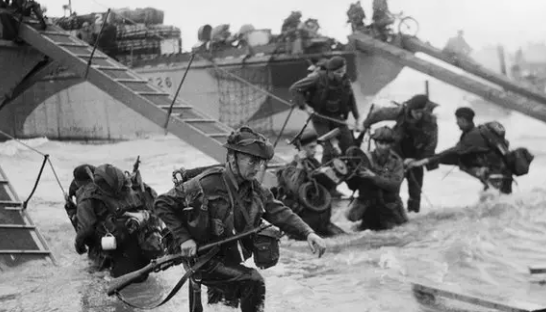
By 1944, the Soviet Union had been bearing the brunt of the land war in Europe for three agonizing years, incessantly demanding that the Western Allies open a “Second Front” in France to relieve pressure in the East. The answer to this demand was Operation Overlord, the cross-Channel invasion of Normandy. Executed on June 6, 1944 (D-Day), it remains the largest and most complex amphibious assault in military history. Breaking through Hitler’s formidable “Atlantic Wall” required an unprecedented synchronization of naval armada, air power, airborne infantry, and logistical engineering.
Operation Overlord and Amphibious Assault Mechanics
The tactical challenges of landing hundreds of thousands of men on heavily defended hostile shores were monumental. The German defenses, overseen by Field Marshal Erwin Rommel, consisted of extensive beach obstacles, submerged mines, concrete bunkers, and pre-sighted artillery zones designed to slaughter infantry at the water’s edge. To overcome this, the Allies employed highly specialized tactics and modified equipment. The invasion beaches were divided into five sectors: Utah and Omaha (American), Gold and Sword (British), and Juno (Canadian).
The assault relied on specialized landing craft, most notably the LCVP (Higgins Boat), which could deliver a platoon of men directly onto the sand. Furthermore, the British developed “Hobart’s Funnies”—a bizarre but highly effective array of modified Churchill and Sherman tanks designed specifically to clear minefields, bridge anti-tank ditches, and destroy concrete pillboxes. Despite these innovations, the landings at Omaha Beach faced near-disaster due to intact German defenses and rough seas, requiring profound individual heroism and naval destroyers firing at point-blank range to finally secure a foothold.
Deception Operations and Airborne Vanguard
The success of D-Day was not secured solely on the beaches, but in the shadows of intelligence and the night skies over France. Operation Fortitude, a massive allied deception campaign, utilized fake radio traffic, double agents, and inflatable dummy tank armies commanded by General George S. Patton to convince the German High Command that the real invasion would occur at the Pas de Calais, the narrowest point of the English Channel. This deception was so successful that Hitler refused to release his vital Panzer reserve divisions to Normandy for weeks, believing the D-Day landings were merely a diversion.
Furthermore, the amphibious assault was preceded by a massive airborne vanguard. In the pitch-black hours before dawn, over 23,000 American and British paratroopers (from the 82nd, 101st, and 6th Airborne Divisions) were dropped behind enemy lines. Despite widespread scattering and heavy casualties, these airborne forces successfully secured vital causeways, destroyed bridges to prevent German counterattacks, and sowed widespread confusion among the defenders. The successful breaching of the Atlantic Wall marked the beginning of the end for Nazi Germany, trapping them in an unwinnable two-front war.
Strategic Synthesis: How Allied Coordination Won the War
Analyzing these turning points in isolation provides only a partial understanding of the Allied victory. The true mechanism of Axis defeat lay in the grand strategic synthesis of these distinct battles. The Allies did not just win tactical engagements; they fundamentally out-produced, out-planned, and out-coordinated the Axis powers on a global scale. The synergy between the Eastern and Western fronts, backed by unstoppable industrial momentum, created a crushing vice that the totalitarian regimes could not escape.
Industrial Production vs. Blitzkrieg Limitations
The German Blitzkrieg was a tactical doctrine designed for short, sharp campaigns to compensate for Germany’s lack of deep industrial resources and raw materials. Once the conflicts at Moscow, El Alamein, and Kursk forced Germany into protracted wars of attrition, their defeat became a mathematical certainty. The United States, acting as the “Arsenal of Democracy,” out-produced all Axis powers combined in terms of aircraft, tanks, and merchant shipping. Simultaneously, the Soviet Union performed a logistical miracle by physically relocating thousands of factories east of the Ural Mountains, shielding them from German bombers and churning out tens of thousands of T-34 tanks. This overwhelming material superiority ensured that while the Allies could absorb and replace massive losses, every German tank destroyed or veteran pilot killed was irreplaceable.
| Battle | Theater | Primary Strategic Outcome | Key Tactical Innovation |
|---|---|---|---|
| Pearl Harbor | Pacific | United States enters global war; full industrial mobilization. | Massed carrier-based naval aviation strike. |
| Battle of Britain | Western Europe | Halted German invasion plans; preserved base for Allied counter-attack. | Integrated radar command and control (Dowding System). |
| Battle of Moscow | Eastern Europe | Ended the myth of Blitzkrieg invincibility; forced a war of attrition. | Winter warfare logistics and Siberian reserve deployment. |
| El Alamein | North Africa | Secured the Suez Canal; eliminated Axis threat in Africa. | Set-piece artillery barrages and overwhelming supply chain management. |
| Battle of Kursk | Eastern Europe | Permanently broke German offensive armored capability in the East. | Massive defense-in-depth and anti-tank “Pakfronts”. |
| Normandy (D-Day) | Western Europe | Opened the Western Front; triggered the collapse of Nazi Germany. |