The history of human conflict is not merely a record of dates and names, but a complex evolution of strategy, technology, and political will. From the grassy slopes of Senlac Hill in 1066 to the dense jungles of Southeast Asia and the arid deserts of the Sinai Peninsula, certain battles stand as “Pillar Events” that fundamentally restructured the world order. This analysis synthesizes three distinct eras of warfare to understand how military innovation and strategic adaptation dictate the rise and fall of empires.
The Battle of Hastings: A Paradigm Shift in Medieval Warfare
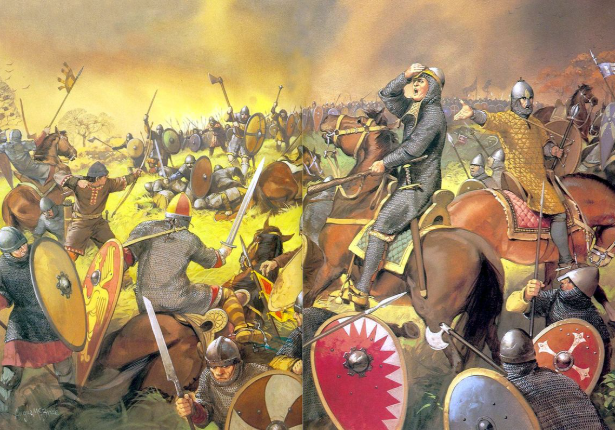
The Battle of Hastings, fought on October 14, 1066, represents one of the most significant cultural and military transitions in Western history. Following the death of Edward the Confessor, the English throne became the center of a three-way power struggle between Harold Godwinson, Harald Hardrada, and William of Normandy. While the conflict is often simplified as a Norman victory, its tactical depth reveals a sophisticated clash of two distinct military traditions: the Germanic infantry-based shield wall and the emerging Continental tradition of heavy cavalry.
The Saxon Shield Wall and the Defense of Senlac Hill
King Harold Godwinson’s army was primarily composed of Housecarls—elite professional soldiers—and the Fyrd, or local militia. Their primary tactical formation was the shield wall, a dense, interlocking barrier of shields that proved nearly impenetrable to frontal assaults. Positioned atop the ridge of Senlac Hill, the Saxons held a significant topographical advantage. The density of the formation meant that even when soldiers were killed, the pressure from the rear kept the wall standing, creating a physical and psychological barrier that frustrated the Norman invaders for the better part of the day.
William’s Tactical Flexibility and the Feigned Retreat
William the Conqueror’s forces were more diverse, consisting of archers, infantry, and, most crucially, heavy cavalry. The Norman knights utilized the stirrup, a technological innovation that allowed them to deliver devastating shocks while remaining mounted. However, the Saxon shield wall initially resisted these charges. The turning point occurred when the Normans utilized “feigned retreats.” By pretending to flee in panic, they lured segments of the less-disciplined Saxon Fyrd down from the high ground. Once the Saxons broke formation to pursue, the Norman cavalry wheeled around and decimated the now-exposed infantry in the open field.
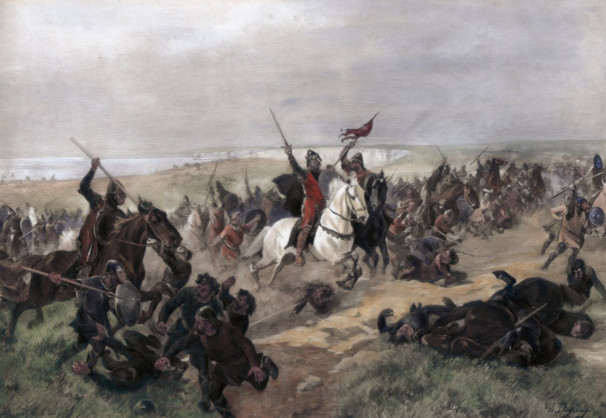
Tactical Breakdown: The Norman Cavalry vs. The Saxon Shield Wall
To understand the outcome of 1066, one must examine the specific operational mechanics employed by both sides. The battle lasted an unusually long time for the medieval period—nearly nine hours—indicating the high level of resilience in the Anglo-Saxon military structure. The eventual collapse of the Saxon line was a result of attrition and the loss of command and control following the death of King Harold.
The Role of Missile Troops
Archery played a pivotal role in softening the Saxon defenses. Early in the battle, Norman archers fired directly at the shield wall, but the high angle of the hill meant most arrows either hit the shields or flew over the English heads. Late in the day, William ordered his archers to adopt a higher trajectory, raining arrows down behind the shields. It was during one of these volleys that Harold Godwinson was reportedly struck in the eye, a wound that proved fatal and led to the total disintegration of Saxon resistance.
- Norman Composition: Approximately 7,000 to 10,000 troops, including 2,000-3,000 cavalry.
- Saxon Composition: Roughly 5,000 to 8,000 troops, almost entirely infantry-based.
- Key Outcome: The total replacement of the Anglo-Saxon aristocracy with a Norman-French ruling class, forever changing the English language and legal system.

The Vietnam War: Mastery of Asymmetric Guerrilla Tactics
Fast-forwarding nearly a millennium, the Vietnam War (1955–1975) offers a stark contrast in military logic. This conflict was the ultimate test of asymmetric warfare, where a technologically superior superpower, the United States, faced a highly motivated, decentralized insurgent force in the form of the Viet Cong (NLF) and the North Vietnamese Army (NVA). The war demonstrated that military dominance on paper does not equate to strategic victory in a “People’s War.”
The Doctrine of “Dau Tranh”
The North Vietnamese strategy was rooted in the concept of Dau Tranh (struggle), which integrated military action with political, diplomatic, and psychological warfare. Unlike conventional armies that seek to hold territory, the Viet Cong sought to control the population and exhaust the enemy’s will to fight. This was achieved through a series of calculated steps:
- Mobility and Stealth: Utilizing the jungle canopy for cover and avoiding large-scale “set-piece” battles unless the conditions were overwhelmingly favorable.
- The Tunnel Systems: Extensive networks like the Cu Chi tunnels provided living quarters, hospitals, and supply routes, allowing the insurgents to disappear into the earth during B-52 bombing raids.
- The Ho Chi Minh Trail: A sophisticated logistical artery that moved manpower and materiel from the North through neutral Laos and Cambodia, bypassing US border defenses.
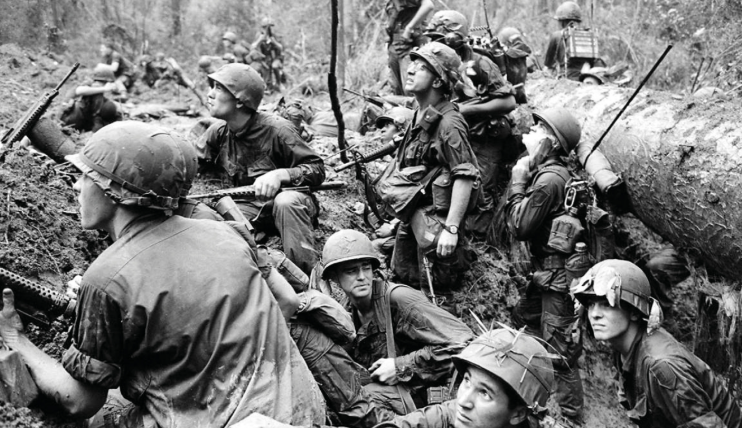
Strategic Depth: The Ho Chi Minh Trail and Jungle Operations
The US military relied heavily on technological superiority, employing massive firepower, “Search and Destroy” missions, and chemical defoliants like Agent Orange to strip the jungle of its cover. However, these tactics often alienated the local population, further fueling the insurgency. The Tet Offensive of 1968 served as the war’s psychological pivot point. Although the NVA and Viet Cong suffered massive military losses, the sheer scale of the coordinated attacks across South Vietnam convinced the American public that the war was unwinnable.
| Feature | US/South Vietnam Strategy | Viet Cong/NVA Strategy |
|---|---|---|
| Core Objective | Containment and Attrition | National Liberation and Reunification |
| Primary Tactic | Technological Firepower & Air Superiority | Guerrilla Warfare & Political Mobilization |
| Logistics | Heavy reliance on sea/air supply lines | Decentralized Ho Chi Minh Trail |
| Success Metric | Body Count / Kill Ratios | Political Will / Territorial Influence |

The Yom Kippur War: Modern Technology and Geopolitical Realignment
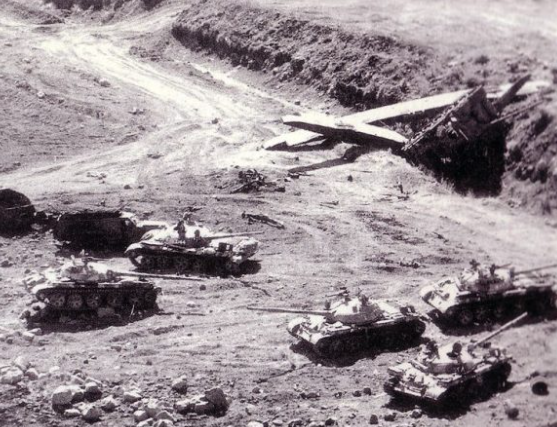
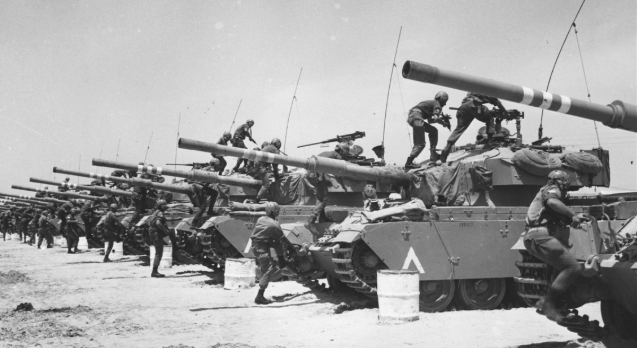
Occurring simultaneously with the final stages of the Vietnam War, the 1973 Yom Kippur War (October 6–25) fundamentally reshaped the Middle East. Launched as a surprise attack by Egypt and Syria during the holiest day in Judaism, the conflict was a high-intensity, conventional war that introduced the world to the lethality of modern missile technology. It was a war of rapid movement, massive tank battles, and intense electronic warfare.
The Bar Lev Line and the Crossing
Egypt’s initial success was built on meticulous planning. They utilized high-pressure water cannons to breach the sand ramparts of the Bar Lev Line, an Israeli defensive fortification along the Suez Canal. This operation, known as Operation Badr, allowed Egyptian forces to establish a bridgehead in the Sinai. For the first time, Israeli armored units, which had dominated in 1967, found themselves vulnerable to infantry-portable Sagger anti-tank missiles and mobile SAM-6 surface-to-air missiles, which neutralized the Israeli Air Force (IAF) over the battlefield.

Technological Evolution: SAM Batteries and Anti-Tank Guided Missiles
The Yom Kippur War was a “laboratory” for Cold War weapon systems. The Soviet Union supplied the Arab coalition, while the United States initiated Operation Nickel Grass, a massive airlift to replenish Israeli losses. This proxy-war element brought the world to the brink of nuclear confrontation. However, the tactical lesson was clear: the era of the tank and the aircraft as undisputed masters of the battlefield was over. Precision-guided munitions had leveled the playing field, allowing infantry to destroy multi-million dollar assets with relatively inexpensive missiles.
Geopolitical Consequences
The war ended with an Israeli military recovery, including General Ariel Sharon’s daring crossing of the Suez Canal to encircle the Egyptian Third Army. However, the political victory belonged to Egypt. The conflict shattered the myth of Israeli invincibility and eventually led to the Camp David Accords, resulting in the first peace treaty between Israel and an Arab nation. It also triggered the 1973 Oil Crisis, proving that energy resources could be used as a potent strategic weapon.
Comparative Analysis: Military Innovation and Strategic Adaptation
When comparing Hastings, Vietnam, and Yom Kippur, several cross-era patterns emerge. In each case, a dominant military power was challenged by an opponent who utilized either a new technology or a new strategic philosophy to negate the leader’s advantage.
- Technology vs. Tradition: William used the stirrup and combined arms; the North Vietnamese used the tunnel and the jungle; Egypt used the SAM missile.
- Psychological Will: In all three conflicts, the side that could sustain the highest level of losses while maintaining political cohesion eventually dictated the long-term outcome.
- Intelligence and Surprise: Harold was caught off guard by William’s landing; the US was surprised by the Tet Offensive; Israel was stunned by the Yom Kippur attack.
The Legacy of Conflict: How History Shapes Modern Defense Doctrine
The lessons from these battles continue to inform modern military doctrine. The transition from the infantry-heavy formations of Hastings to the decentralized, high-tech battlefields of the 20th century highlights a shift toward multi-domain operations. Today, military planners must account for the lessons of Vietnam—that political legitimacy is the ultimate high ground—and the lessons of Yom Kippur—that technological superiority is fleeting and easily disrupted by precision-guided countermeasures.
Ultimately, the “Hastings Saga,” the “Vietnam Fog,” and the “Yom Kippur Clash” are not isolated events but chapters in a continuous narrative of human adaptation. As we move into an era of cyber warfare and artificial intelligence, these historical precedents serve as a reminder that strategy, more than just force, remains the decisive factor in human history.
Frequently Asked Questions (FAQ)
- Q1: Why was the Battle of Hastings considered a turning point in English history?
- The Battle of Hastings resulted in the death of the last Anglo-Saxon king and the installation of a Norman-French monarchy. This led to the introduction of feudalism, a massive restructuring of the English language, and a shift in England’s geopolitical focus from Scandinavia toward Continental Europe.
- Q2: How did the Viet Cong manage to survive US air superiority?
- The Viet Cong utilized a combination of natural and artificial cover. They lived and moved within the dense jungle canopy which obscured them from aerial view, and they constructed thousands of miles of underground tunnels (like the Cu Chi tunnels) to survive bombing raids and launch surprise attacks.
- Q3: What was the “Sagger” missile’s impact in the Yom Kippur War?
- The AT-3 Sagger was a Soviet-made anti-tank guided missile. During the initial stages of the Yom Kippur War, Egyptian infantry used these missiles to destroy hundreds of Israeli tanks, proving that infantry could now effectively counter heavy armor without needing tanks of their own.
- Q4: Did the United States lose the Vietnam War militarily?
- Militarily, the US won almost every major engagement, including the Tet Offensive. However, the war was a strategic and political defeat. The US failed to achieve its objective of maintaining a stable, non-communist South Vietnam, and the domestic political cost became unsustainable.
- Q5: How did the Yom Kippur War lead to peace?
- The war restored Egyptian pride and demonstrated that the status quo in the Middle East was untenable. This realization on both sides—that military force could not provide absolute security—paved the way for the 1978 Camp David Accords and the 1979 Egypt-Israel Peace Treaty.

Related Posts