Naval history is replete with engagements that have not only decided the fate of battles but also fundamentally altered the course of empires and global power dynamics. Among these, the Battle of Trafalgar and the Incheon Landing stand out as monumental achievements in military strategy and execution. While separated by centuries and distinct geopolitical contexts, both battles exemplify the profound impact of decisive naval action. This article provides an in-depth examination of these two critical historical events, dissecting their strategic underpinnings, tactical intricacies, and lasting legacies.
The Battle of Trafalgar: Nelson’s Legendary Naval Triumph
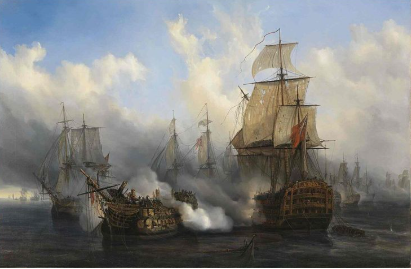
The Battle of Trafalgar, fought on October 21, 1805, off Cape Trafalgar on the Atlantic coast of southwestern Spain, was a pivotal naval engagement of the Napoleonic Wars. The Royal Navy, under the command of Vice-Admiral Lord Horatio Nelson, decisively defeated the combined fleets of the French and Spanish Navies. This victory was not merely a tactical masterpiece but a strategic imperative that secured British naval supremacy for the next century, effectively ending Napoleon Bonaparte’s ambitions of invading Britain.
Background and Strategic Context
The prelude to Trafalgar was a complex geopolitical chess match. Napoleon, seeking to cripple Britain and achieve dominance over Europe, aimed to lure the British fleet away from the English Channel, thereby clearing the way for his invasion forces. His strategy involved consolidating his naval forces, particularly by bringing his Mediterranean fleet out of Toulon and uniting it with the Spanish fleet. This combined force was intended to gain temporary control of the Channel. However, the French and Spanish fleets, under the command of Admiral Pierre-Charles Villeneuve, were consistently outmaneuvered and pursued by Nelson, who skillfully employed his knowledge of naval tactics and his understanding of his adversary’s potential movements.
Nelson’s Innovative Tactics
Nelson’s genius at Trafalgar lay not just in his bravery but in his radical departure from conventional naval warfare. Instead of engaging in the traditional parallel line of battle, which allowed for broadside exchanges but was slow and often indecisive, Nelson devised a daring plan. He divided his fleet into two columns, intending to break the enemy’s line of battle in the center and rear. This tactic, known as the “Nelson Touch,” aimed to create chaos and confusion among the enemy ranks, isolate segments of their fleet, and engage them at close quarters where the superior gunnery and seamanship of the Royal Navy could be fully exploited. The first column, led by Nelson himself in HMS Victory, was to cut the enemy line ahead of the enemy flagship, while the second column, under Vice-Admiral Cuthbert Collingwood in HMS Royal Sovereign, was to cut the line astern of the enemy flagship.
The Engagement and its Aftermath
The battle commenced with the two British columns sailing directly into the allied fleet, enduring heavy fire from the enemy ships. The disciplined British crews, despite the intense bombardment, pressed on with their mission. HMS Victory successfully broke the Franco-Spanish line, engaging Villeneuve’s flagship, the Bucentaure, at close range. The ensuing melee was fierce and brutal. While the British achieved a spectacular victory, capturing or destroying 22 enemy ships without losing a single one of their own, the cost was immense. Lord Nelson was mortally wounded by a musket ball fired from the French ship Redoutable. His death, however, did not diminish the triumph; instead, it immortalized him as one of Britain’s greatest heroes. The victory at Trafalgar was so decisive that it removed any immediate threat of a French invasion and ensured British maritime dominance for the foreseeable future, a period often referred to as the “Pax Britannica.”
From Despair to Victory: The Incheon Landing Battle Unveiled
The Incheon Landing, a crucial amphibious assault during the Korean War, took place on September 15, 1950. Orchestrated by the United Nations Command (UNC) under the leadership of General Douglas MacArthur, this daring operation was a strategic gamble that dramatically reversed the fortunes of the war. At a time when UN and South Korean forces were being pushed back into a small defensive perimeter in the south of the Korean peninsula, the Incheon Landing was a bold, high-risk maneuver designed to cut off North Korean supply lines and recapture the capital city of Seoul.
The Dire Situation Before Incheon
By the summer of 1950, the Korean War had taken a dire turn for the United Nations forces. North Korean People’s Army (NKPA) forces, well-equipped and aggressive, had rapidly advanced southward, pushing the Republic of Korea Army (ROKA) and the initial contingent of U.S. forces into the Pusan Perimeter, a defensive line encompassing roughly 10% of South Korea’s territory. The situation was desperate, with the NKPA threatening to overwhelm the last pockets of UN resistance. The morale of the allied forces was low, and the strategic initiative lay firmly with North Korea. A conventional frontal assault to break the Pusan Perimeter seemed unlikely to succeed in the short term and would have been incredibly costly.
MacArthur’s Audacious Plan
General MacArthur, renowned for his strategic acumen and often audacious planning, identified Incheon, a port city on the west coast of Korea, as the ideal location for a counter-offensive. The strategic rationale was compelling: Incheon offered the possibility of outflanking the North Korean forces, severing their supply lines, and encircling a significant portion of their army. However, the plan was fraught with peril. Incheon’s harbor presented extreme logistical challenges, including dangerously strong tidal currents, vast mudflats exposed at low tide, and limited port facilities. The city itself was heavily defended by North Korean troops. Despite these formidable obstacles, MacArthur’s vision of a decisive blow to turn the war around prevailed over the significant risks.
Execution of the Amphibious Assault
The Incheon Landing was executed in three phases. The initial phase involved naval bombardments and the securing of key islands to establish a foothold. The main assault, codenamed Operation Chromite, began on September 15, 1950. U.S. Marines, supported by naval gunfire and air support, landed on Wolmi-do Island, a heavily fortified outpost guarding the harbor entrance. After overcoming fierce resistance, the Marines secured the island and then proceeded to the mainland. The landing on the mainland itself was a complex operation, requiring forces to navigate the treacherous tidal conditions. The success of the landing was greatly aided by the element of surprise, as North Korean forces had not anticipated an amphibious assault at such a challenging location. The initial landings were met with determined resistance, but the superior firepower and training of the UN forces, particularly the U.S. Marines, gradually overwhelmed the defenders.
Impact and Significance of the Incheon Landing
The Incheon Landing was a resounding success and a critical turning point in the Korean War. Within days of the landing, UN forces recaptured Seoul, the South Korean capital, which had fallen to the North Koreans early in the conflict. The operation effectively cut off thousands of North Korean troops fighting in the south, leading to their eventual destruction or capture. The success boosted UN morale and shifted the strategic momentum of the war decisively in favor of the United Nations and South Korea. It allowed UN forces to pursue the North Koreans deep into their own territory, pushing them back across the 38th parallel. While the war would continue for several more years, the Incheon Landing is widely regarded as one of the most successful amphibious operations in military history, a testament to MacArthur’s bold vision and the courage of the soldiers and sailors who executed the plan.
Frequently Asked Questions (FAQ)
- What was the primary strategic objective of the Battle of Trafalgar?
- The primary strategic objective of the Battle of Trafalgar was to destroy the combined French and Spanish fleets, thereby preventing Napoleon Bonaparte from invading Great Britain and securing permanent British naval supremacy. This victory neutralized the threat of invasion and allowed Britain to continue its blockade of France and its dominance of the seas.
- What made Nelson’s tactics at Trafalgar so innovative?
- Nelson’s tactics at Trafalgar were innovative because he abandoned the traditional line-of-battle strategy in favor of a plan to break the enemy’s line into two sections. This allowed his faster, more maneuverable ships to engage enemy vessels at close range, causing confusion and disrupting their formations, while leveraging the superior gunnery and seamanship of the Royal Navy.
- Why was the Incheon Landing considered such a high-risk operation?
- The Incheon Landing was considered high-risk due to the extremely challenging geographical and environmental conditions of Incheon harbor. These included powerful tidal currents, vast mudflats exposed at low tide, limited landing beaches, and the fact that the port was heavily defended by North Korean forces. The success of the operation depended heavily on precise timing and overcoming these formidable natural and man-made obstacles.
- How did the Incheon Landing change the course of the Korean War?
- The Incheon Landing was a decisive turning point in the Korean War. By landing behind enemy lines and recapturing Seoul, UN forces successfully cut off and encircled a significant portion of the North Korean People’s Army fighting in the south. This dramatically shifted the strategic initiative, boosted UN morale, and allowed for the recapture of South Korean territory, fundamentally altering the trajectory of the conflict.
- What lessons can be learned from both Trafalgar and the Incheon Landing regarding military strategy?
- Both battles highlight the importance of bold, decisive leadership, innovative strategic thinking, and meticulous planning. Trafalgar demonstrates the power of naval dominance and tactical genius in achieving overarching strategic goals, even at great personal cost. The Incheon Landing underscores the value of calculated risks, exploiting enemy weaknesses through outflanking maneuvers, and the critical role of amphibious operations in achieving strategic objectives, even in the face of significant environmental challenges.

Related Posts