The Strategic Landscape of European Warfare: An Introduction
The tapestry of European history is irrevocably woven with the threads of monumental military conflicts. To understand the geopolitical boundaries, cultural divides, and technological advancements of modern Europe, one must deeply analyze the crucible of its battlefields. Spanning from the late 17th century to the harrowing depths of the First World War, the continent witnessed a radical transformation in how empires asserted dominance, defended their sovereignty, and mechanized the art of war. This comprehensive analysis dissects three cornerstone engagements: the Battle of Vienna, the First Battle of the Marne, and the Battle of Verdun. Each represents a distinct epoch in military doctrine, shifting from the era of dynastic sieges to the mechanized slaughter of trench warfare.
The Evolution of Continental Defense
Before the industrial revolution redefined the logistical capacities of nation-states, continental defense relied heavily on fortified urban centers and the rapid mobilization of coalition cavalry. The defense of Christendom against the expanding Ottoman Empire in the 1600s exemplifies this reliance on massive, decisive, single-day engagements. However, as the centuries progressed, the concept of a “decisive battle” morphed. By the dawn of the 20th century, the interconnected web of European alliances and the sheer scale of conscripted armies meant that defensive warfare became a protracted, grueling affair of inches and attrition, effectively rendering the classical cavalry charge obsolete.
How Geography Dictated the Theaters of War
Geography has consistently served as the most unforgiving commander in European warfare. The plains surrounding Vienna provided the perfect theater for sweeping cavalry maneuvers, while the river valleys of the Marne created natural defensive barriers that could stall an overwhelming infantry advance. In stark contrast, the hilly, wooded terrain of Verdun was transformed by unprecedented artillery barrages into a lunar landscape, proving that while geography dictates the initial terms of engagement, industrialized warfare possesses the terrifying capability to physically alter the earth itself. Understanding these topographical imperatives is essential for grasping the strategic decisions made by commanders across these disparate eras.
The Battle of Vienna (1683): Halting the Ottoman Advance
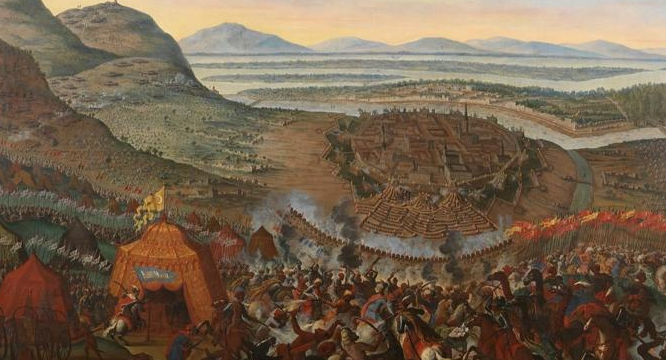
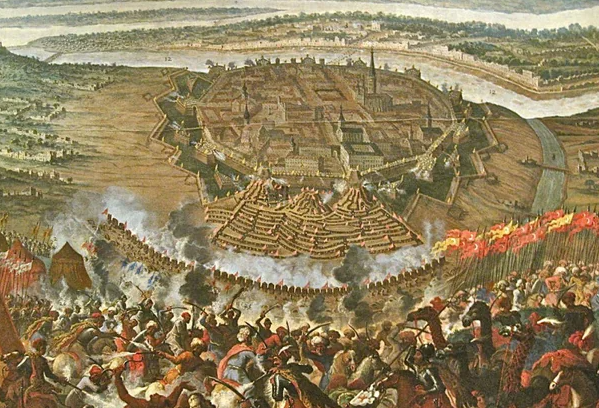
Fought on September 12, 1683, the Battle of Vienna stands as one of the most consequential military engagements in world history. It marked the climax of the centuries-long struggle between the Holy Roman Empire and the Ottoman Empire. Under the command of Grand Vizier Kara Mustafa Pasha, an immense Ottoman force of approximately 150,000 men laid siege to the Austrian capital. The defenders, heavily outnumbered, endured a grueling two-month blockade characterized by relentless tunneling, explosive mining, and desperate hand-to-hand combat within the city’s breached walls. The fall of Vienna would have opened the heart of Europe to Ottoman conquest, fundamentally altering the continent’s religious and political destiny.
The Siege and the Desperate Defense of the Austrian Capital
The Ottoman strategy relied heavily on their elite Janissaries and an extensive network of sappers. Because the city’s fortifications were robust, the Ottomans utilized a methodical approach of digging trenches closer to the walls, eventually planting massive black powder charges beneath the bastions. Count Ernst Rüdiger von Starhemberg, commanding the Viennese garrison of merely 15,000 soldiers and civilian volunteers, implemented a scorched-earth policy in the suburbs to deny the enemy cover. The defenders fought with exceptional tenacity, utilizing counter-mining techniques to intercept Ottoman sappers in subterranean skirmishes that were as terrifying as they were lethal.
- Subterranean Warfare: The use of explosive mines by Ottoman sappers forced the Austrians to develop sophisticated acoustic listening posts to detect digging, leading to brutal underground clashes.
- Logistical Starvation: By early September, the Viennese garrison was severely depleted by combat, exhaustion, and an outbreak of dysentery, pushing the city to the absolute brink of capitulation.
- Strategic Delay: Starhemberg’s primary objective was not to defeat the Ottoman army outright, but to bleed them and delay the final assault long enough for a Christian relief force to mobilize and arrive.
This desperate holding action set the stage for one of the most dramatic rescue missions in military history. The Pope had successfully brokered the Treaty of Warsaw, compelling the Polish-Lithuanian Commonwealth to march to Austria’s aid, a logistical miracle given the fragmented nature of 17th-century European politics.
The Arrival of the Winged Hussars and the Decisive Charge
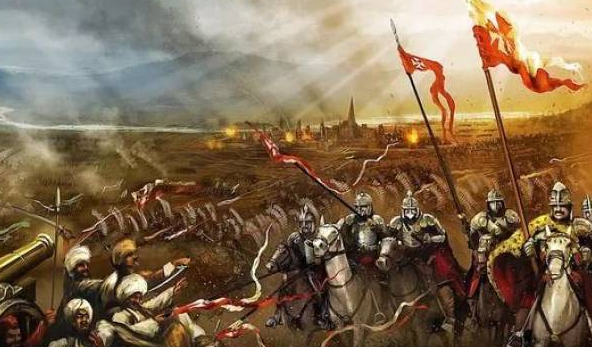
As the city’s defenses crumbled, the Holy League relief force, commanded by King John III Sobieski of Poland, arrived on the Kahlenberg heights overlooking the besieged city. On the afternoon of September 12, after hours of grueling infantry combat that pushed the Ottoman lines back, Sobieski unleashed the largest cavalry charge in recorded history. Over 18,000 horsemen, spearheaded by 3,000 elite Polish Winged Hussars, descended from the hills. The sheer kinetic force of heavily armored lancers crashing into the exhausted and disorganized Ottoman flanks shattered the besieging army’s morale. The Ottoman camp was overrun in mere hours, securing a decisive victory that permanently halted Ottoman expansion into Central Europe.
The First Battle of the Marne (1914): The Thrilling Early Counterattack
Fast forward to the cataclysm of September 1914. The First Battle of the Marne represents arguably the most critical juncture of World War I. The German Empire, executing a modified version of the Schlieffen Plan, had swept through Belgium and Northern France with terrifying speed, aiming to encircle Paris and crush the French army in a swift, decisive campaign. By early September, German vanguard units were within 30 miles of the French capital. The French government had evacuated to Bordeaux, and a rapid Allied defeat seemed almost inevitable. However, a combination of German logistical overextension, aerial reconnaissance, and a desperate, brilliantly timed Allied counter-offensive reversed the tide of the war.
The Schlieffen Plan and the Brink of French Collapse
The strategic premise of the Schlieffen Plan was to avoid a two-front war by rapidly defeating France in the west before the Russian Empire could fully mobilize in the east. The German right wing, commanded by Alexander von Kluck, was tasked with the massive wheeling motion around Paris. However, the relentless marching pace exhausted the German infantry, and their supply lines became perilously stretched. Crucially, von Kluck made the fateful decision to wheel his forces east of Paris to pursue the retreating French Fifth Army, exposing his right flank to the Paris garrison. This operational deviation provided the French High Command with a fleeting, high-stakes window of opportunity.
The Miracle on the Marne and the Taxis of Paris
French Commander-in-Chief Joseph Joffre, recognizing the exposed German flank, ordered a massive counterattack. The newly formed French Sixth Army, supported by the British Expeditionary Force (BEF), struck the vulnerable German flank along the Ourcq River. The ensuing clash forced von Kluck to pivot his forces to meet the threat, inadvertently opening a 30-mile gap between the German First and Second Armies. Allied forces poured into this gap, threatening to encircle the German divisions. It was during this critical phase that the legendary “Taxis of the Marne” were deployed. General Joseph Gallieni requisitioned approximately 600 Parisian taxicabs to transport 6,000 reserve infantrymen to the front. While strategically minor in the grand scale of the battle, this unprecedented use of motorized civilian transport provided an immense psychological boost to the French nation.
- Aerial Reconnaissance: For the first time in military history, Allied reconnaissance aircraft definitively identified the gap in the German lines, proving the indispensable value of aviation in modern warfare.
- The BEF’s Advance: The British Expeditionary Force, though small in number, advanced directly into the gap between the German armies, forcing the German High Command to order a general retreat to the Aisne River.
- Strategic Reversal: The Allied victory destroyed the illusion of a short war. The German failure to capture Paris meant they were now locked into the exact scenario they feared most: a protracted, two-front war of attrition.
The immediate consequence of the Marne was the “Race to the Sea,” as both sides attempted to outflank each other, eventually resulting in a continuous line of fortified trenches stretching from the Swiss border to the English Channel. The war of maneuver was officially dead.
The Battle of Verdun (1916): An Endless Hell on Earth
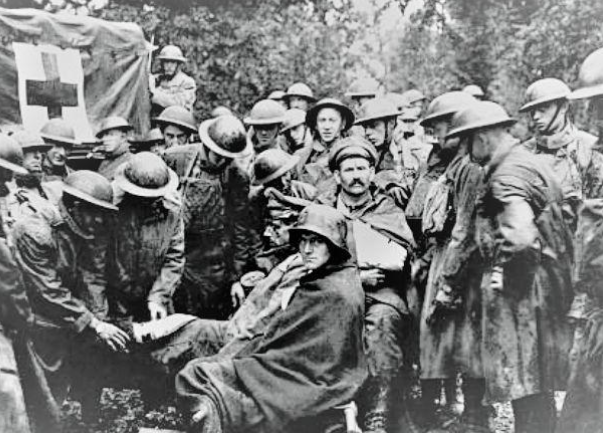
If the Marne was a battle of maneuver and desperate counterattacks, the Battle of Verdun was the absolute antithesis: a localized, industrialized meat grinder designed specifically to annihilate the enemy’s manpower. Initiated by the German Chief of General Staff, Erich von Falkenhayn, on February 21, 1916, Verdun lasted for 302 agonizing days, making it one of the longest and bloodiest battles in human history. The conflict transcended traditional military objectives; it was not about capturing strategic territory, but rather about inflicting such disproportionate casualties that the French army would simply cease to exist as a cohesive fighting force.
The Strategy of Attrition: “Bleeding France White”
Falkenhayn selected the fortress city of Verdun because of its immense historical and psychological significance to the French people. He correctly calculated that France would throw every available man into its defense rather than see it fall. The German strategy, chillingly referred to as Ausblutung (bleeding white), relied on massing an unprecedented concentration of artillery to create a killing zone. The initial German bombardment utilized over 1,200 artillery pieces, firing roughly one million shells in the first ten hours alone. This apocalyptic barrage literally reshaped the topography, destroying forests, obliterating villages, and burying soldiers alive in their shattered defensive works.
The Industrialization of Slaughter and Artillery Barrages
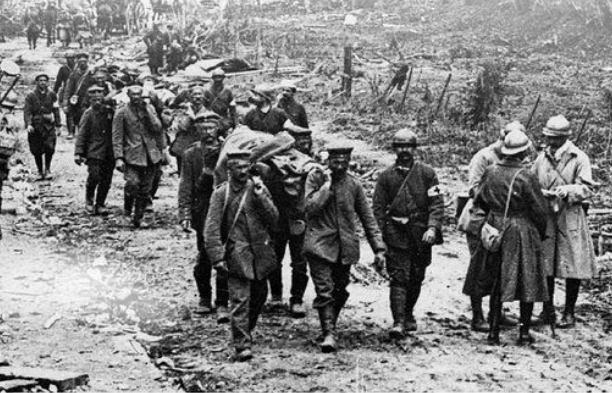
The Battle of Verdun represents the zenith of industrialized warfare. Infantrymen on both sides were reduced to mere occupants of a blasted wasteland, forced to endure relentless, deafening artillery fire day and night. The logistics required to sustain this level of destruction were staggering. The French defense relied entirely on a single, narrow road—the Voie Sacrée (Sacred Way)—which was kept operational 24 hours a day by an endless convoy of trucks transporting troops, ammunition, and supplies to the front, while simultaneously evacuating the mangled wounded. The introduction of horrific new weapons, such as phosgene gas and flamethrowers, further solidified Verdun’s reputation as a literal hell on earth.
- Fort Douaumont: The largest and most heavily fortified of the Verdun forts, its capture by a small German patrol early in the battle was a massive psychological blow to France, leading to months of bloody counterattacks to retake it.
- The Creeping Barrage: Verdun saw the refinement of artillery tactics, including the creeping barrage, where a curtain of artillery fire moved just ahead of advancing infantry, requiring precise synchronization.
- The Rotation System: To prevent the complete mutiny of his forces, French General Philippe Pétain instituted the Noria system, rapidly rotating divisions in and out of the Verdun sector to ensure the psychological burden was shared across the entire French army.
Despite the incomprehensible carnage, the French line held. The rallying cry “Ils ne passeront pas!” (They shall not pass) became the defining emblem of French national resolve. By December 1916, the French had recaptured most of the lost ground, but at a catastrophic cost. Combined casualties are estimated at over 700,000 killed, wounded, or missing, rendering Verdun a tragic monument to the futility of attritional warfare.
The Evolution of Military Logistics and Troop Mobilization
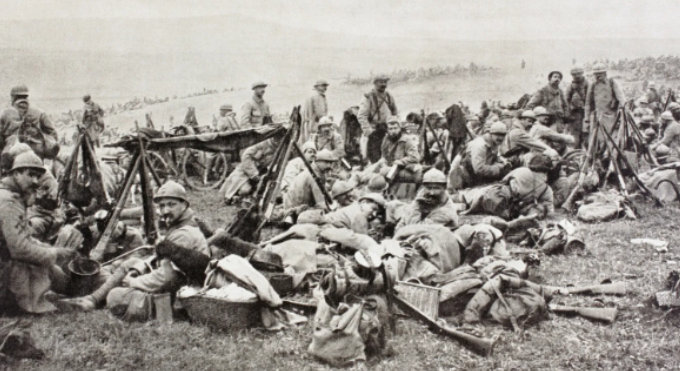
Analyzing these three historic battles reveals a fascinating trajectory in the science of military logistics. In 1683, the Holy League’s ability to march an international coalition across Central Europe to relieve Vienna was considered a monumental logistical triumph of the era, heavily dependent on foraging, rudimentary supply trains, and the seasonal availability of fodder for tens of thousands of horses. The armies of the 17th century were fundamentally constrained by the speed of a marching man and the carrying capacity of a wagon.
From Foraging to the Sacred Way
By 1914, the paradigm had violently shifted. The First Battle of the Marne demonstrated the absolute necessity of railway networks. The German Schlieffen Plan was essentially a massive, rigid railway timetable, dictating the movement of millions of men. The French counter-mobilization was equally reliant on rail, supplemented by the improvised, yet historically significant, motorized transport of the Paris taxis. This marked the definitive transition from animal-powered logistics to the internal combustion engine. By the time of Verdun in 1916, continuous, high-volume logistical arteries like the Voie Sacrée were the only things keeping entire armies from collapsing under the weight of their own ammunition consumption.
The Industrialization of Warfare and Technological Shifts
The technological chasm between the Siege of Vienna and the horrors of the Western Front is arguably the most profound leap in the history of human conflict. The victory at Vienna was secured by the sheer kinetic energy of a massed cavalry charge—a tactic that had dominated battlefields for millennia. Armor, lances, and black powder muskets defined the lethality of the 17th century. However, the industrial revolution introduced a terrifying new calculus to the battlefield, replacing the heroism of the cavalryman with the cold efficiency of the machine.
The Shift from Kinetic Shock to High Explosives
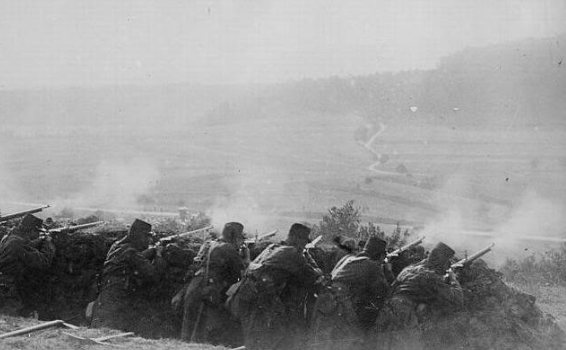
During the Marne, the lethal combination of rapid-fire artillery (such as the French 75mm field gun) and the Maxim machine gun made open-field maneuvering suicidal, forcing armies into the earth. Verdun took this industrialization to its logical, horrific extreme. The battle was fundamentally an artillery duel, where infantrymen were relegated to holding pulverized ground. The introduction of combat aviation for spotting, chemical warfare to clear trenches, and motorized transport fundamentally altered the doctrine of war. The individual soldier was no longer a warrior in the classical sense, but a highly vulnerable cog in a massive, mechanized factory of death.
| Battle | Year | Dominant Tactic | Key Technological Advancement | Strategic Outcome |
|---|---|---|---|---|
| Battle of Vienna | 1683 | Siege warfare & Cavalry charge | Explosive mining, Matchlock muskets | Halted Ottoman expansion in Europe |
| First Battle of the Marne | 1914 | Flanking maneuver & Rapid deployment | Aerial reconnaissance, Motorized transport | Prevented the fall of Paris; began trench warfare |
| Battle of Verdun | 1916 | War of Attrition & Artillery bombardment | Phosgene gas, Flamethrowers, Heavy Howitzers | Decimated both armies; symbol of French resilience |
The Lasting Geopolitical Legacy of These Pivotal Battles
The echoes of these three monumental clashes continue to resonate through the geopolitical architecture of modern Europe. The Battle of Vienna effectively ended the Ottoman threat to Christian Europe, initiating a long, slow decline of the Ottoman Empire and facilitating the rise of the Habsburg Monarchy as a dominant continental power. It solidified the cultural and religious boundaries of Eastern and Central Europe that largely persist to this day. Without the intervention of Sobieski’s Winged Hussars, the demographic and cultural map of Europe would be unrecognizable.
Shaping the Modern World Order
Conversely, the Marne and Verdun were the crucibles that forged the modern world order, albeit through unprecedented destruction. The Miracle on the Marne ensured that World War I would not be a swift, localized conflict, but a global catastrophe that toppled four empires (Russian, German, Austro-Hungarian, and Ottoman). Verdun, with its incomprehensible casualty rates, left deep psychological scars on the French national consciousness. The trauma of Verdun directly influenced post-war French military doctrine, leading directly to the construction of the Maginot Line. These battles did not merely alter borders; they fundamentally reshaped humanity’s understanding of war, statecraft, and the devastating potential of industrialized society.
Frequently Asked Questions (FAQ)
- Q1: Why is the cavalry charge at the Battle of Vienna considered so historically significant?
- The cavalry charge at Vienna, led by Polish King John III Sobieski, is significant because it is widely regarded as the largest cavalry charge in history, involving over 18,000 horsemen. More importantly, it broke the two-month Ottoman siege in a matter of hours, saving the Austrian capital and permanently halting the westward expansion of the Ottoman Empire into Central Europe.
- Q2: What was the Schlieffen Plan, and how did the Battle of the Marne disrupt it?
- The Schlieffen Plan was Germany’s strategic blueprint for fighting a two-front war, relying on a rapid, sweeping offensive through Belgium to encircle and defeat the French army before Russia could mobilize. The First Battle of the Marne disrupted this by exploiting a gap in the overextended German lines, forcing a German retreat and trapping both sides in a protracted, four-year war of trench attrition.
- Q3: Why did the German High Command choose Verdun for their massive 1916 offensive?
- General Erich von Falkenhayn chose Verdun because it was a heavily fortified city with immense historical and sentimental value to the French. He knew the French military would commit all their resources to defend it. His explicit goal was not territorial gain, but a brutal strategy of attrition designed to “bleed France white” by forcing them into a localized killing zone dominated by German artillery.
- Q4: How did logistics differ between the Battle of Vienna and the battles of World War I?
- In 1683 (Vienna), logistics relied on animal transport, foraging, and slow-moving wagon trains, severely limiting the size and speed of armies. By World War I (Marne and Verdun), the industrial revolution had introduced massive railway networks and motorized vehicles (like the Taxis of the Marne and the trucks of the Voie Sacrée), allowing millions of men and millions of artillery shells to be rapidly transported and sustained at the front lines.
- Q5: What is the “Voie Sacrée” and why was it crucial at Verdun?
- The “Voie Sacrée” (Sacred Way) was the single, unpaved road connecting the Verdun battlefield to the French rear echelons. Under the command of General Philippe Pétain, it was kept open 24/7 by a continuous chain of thousands of transport trucks. It was the absolute lifeline of the French defense, delivering thousands of tons of supplies and fresh troops daily, without which Verdun would have undoubtedly fallen to the Germans.

Related Posts