The course of human history is often viewed through the lens of political shifts and cultural evolutions, yet many of these changes were forged in the crucible of war. Certain battles stand out not just for their scale or violence, but for their decisive nature—the way they abruptly ended empires, birthed new superpowers, or preserved entire ways of life. This guide examines the most influential military engagements in history, analyzing their tactical innovations and their profound long-term consequences.
The Strategic Masterpiece of Cannae (216 BC)
The Battle of Cannae remains the gold standard for military strategy, specifically the double-envelopment tactic. Fought during the Second Punic War, it pitted the Carthaginian general Hannibal Barca against a massive Roman Republican army. Despite being significantly outnumbered, Hannibal utilized the terrain and his heterogeneous forces to achieve a victory that is still studied in military academies today.
The Mechanics of Encirclement
Hannibal’s genius lay in his understanding of Roman psychology. The Romans relied on a dense, heavy infantry formation designed to smash through the center. Hannibal countered this by placing his weakest troops in the center in a convex crescent, while his elite African infantry and superior cavalry held the flanks. As the Romans pushed forward, the Carthaginian center retreated, drawing the Romans deeper into a pocket. The crescent inverted into a concave shape, and the elite flanks closed in, while the cavalry struck from the rear. This perfect encirclement resulted in the near-total destruction of the Roman army.
Long-Term Impact on Rome
While Cannae was a catastrophic loss for Rome—losing an estimated 50,000 to 70,000 men in a single day—it paradoxically forged the Roman resolve. It forced Rome to abandon direct confrontation in favor of the Fabian strategy of attrition and eventually led to the professionalization of the Roman legions under Marius. The survival of Rome after such a blow ensured that the Mediterranean would eventually become a Roman lake, rather than a Carthaginian one.
The Naval Triumph at Salamis (480 BC)
If the Battle of Salamis had ended differently, the concept of “The West” might not exist. In 480 BC, the massive Persian Empire under Xerxes I sought to conquer the Greek city-states. After the heroic but failed stand at Thermopylae, the fate of Greece rested on its navy in the narrow straits of Salamis.
Tactical Deception and Geography
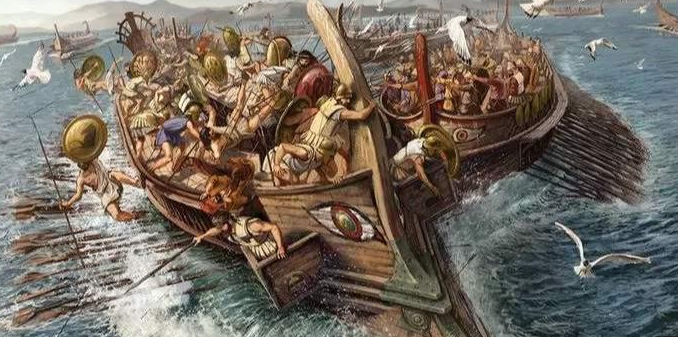
The Athenian leader Themistocles realized that the Greeks could not win in open water against the numerically superior Persian fleet. He used a stratagem of misinformation, sending a “traitor” to Xerxes to claim the Greeks were fleeing. The Persians rushed into the narrow straits, where their numbers became a disadvantage. The smaller, more maneuverable Greek triremes used their bronze rams to devastating effect, sinking the disorganized Persian vessels while Xerxes watched in horror from his throne on the shore.
The Preservation of Democracy
The victory at Salamis ended the Persian threat to mainland Greece. It allowed the Golden Age of Athens to flourish, giving rise to Western philosophy, science, and democracy. Without this victory, the foundations of European culture would likely have been replaced by Persian imperial administration, fundamentally altering the development of the modern world.
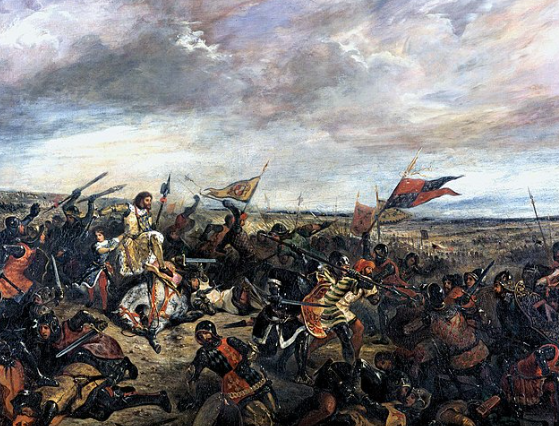
The Clash of Civilizations at Poitiers (732 AD)
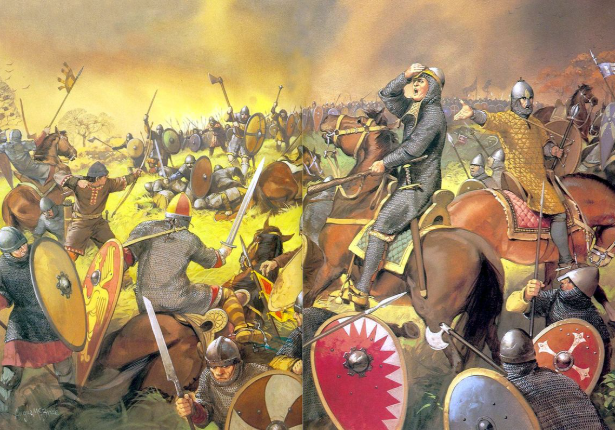
The Battle of Poitiers (also known as the Battle of Tours) is often cited as the engagement that halted the expansion of the Umayyad Caliphate into Western Europe. Charles Martel, the Frankish Mayor of the Palace, faced a seasoned Muslim force that had already swept through the Iberian Peninsula.
Infantry vs. Cavalry
Martel’s victory was a rare example of infantry successfully resisting heavy cavalry during the Middle Ages. He chose a wooded, elevated position that forced the Umayyad cavalry to charge uphill through trees, breaking their momentum. The Frankish “wall of ice” held firm through repeated assaults. When news spread that the Frankish forces were raiding the Umayyad baggage train, the Muslim army broke formation to protect their spoils, leading to the death of their leader, Abdul Rahman Al Ghafiqi.
The Rise of the Carolingians
This victory solidified Charles Martel’s power and paved the way for his grandson, Charlemagne, to be crowned Holy Roman Emperor. It established the Carolingian Dynasty and ensured that Christianity remained the dominant religious and political force in Europe during the Middle Ages.
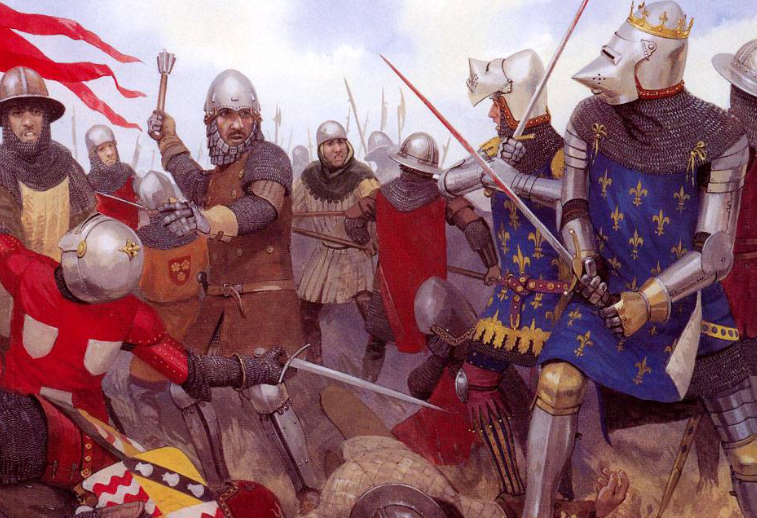
The Fall of Carthage and Roman Dominance (146 BC)
The Third Punic War was less a war and more a systematic execution of a rival power. After decades of tension and the famous refrain “Carthago delenda est” (Carthage must be destroyed), Rome launched a final campaign to eliminate its North African competitor once and for all.
The Siege of Carthage
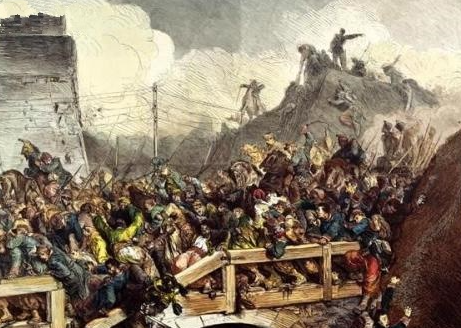
The siege lasted three years, characterized by desperate Carthaginian resistance. The citizens of Carthage turned every building into a fortress and every woman sacrificed her hair to make ropes for catapults. However, the Roman military machine, led by Scipio Aemilianus, was relentless. When the walls finally fell, the Romans engaged in brutal urban warfare, clearing the city street by street.
A New World Order
The total destruction of Carthage signaled the end of the multipolar Mediterranean. Rome was no longer just a regional power; it was an unchallenged hegemon. The wealth, slaves, and land acquired from Carthage fueled the expansion of the Roman Empire for centuries to come, setting the stage for the Pax Romana.
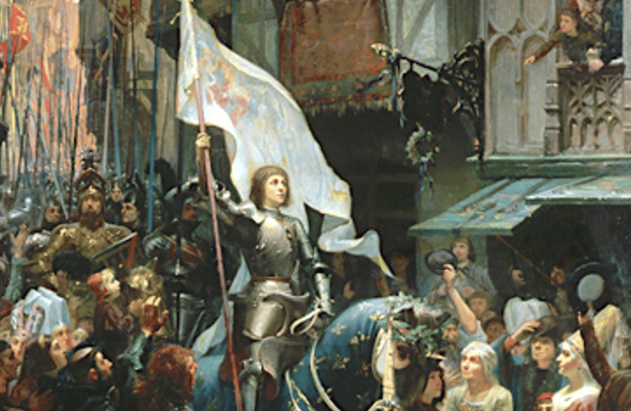
The Collapse of Empire at Sedan (1870 AD)
The Battle of Sedan during the Franco-Prussian War represents the birth of modern European geopolitics. It was the moment when the balance of power shifted from France to a newly unified Germany, orchestrated by the strategic mind of Helmuth von Moltke and the political will of Otto von Bismarck.
The Superiority of Krupp Steel
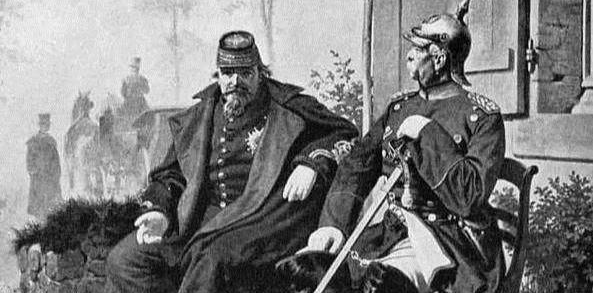
Sedan was a triumph of modern industrial warfare. The Prussian army utilized superior Krupp breech-loading artillery to surround the French forces in a “cauldron.” The French, led by Emperor Napoleon III, found themselves trapped in a valley, pounded by long-range shells they could not answer. The surrender of the Emperor and over 100,000 French soldiers marked a humiliating end to the Second French Empire.
The Birth of the German Empire
The immediate result of Sedan was the unification of the German states into the German Empire, proclaimed at Versailles. This created a massive, powerful state in the heart of Europe, disrupting the “Concert of Europe” and creating the tensions that would eventually lead to World War I and World War II.
Comparative Analysis of Decisive Historical Conflicts
To understand the magnitude of these battles, we must look at their scale and the direct consequences of their outcomes. The following table highlights the key metrics of these historical turning points.
| Battle | Year | Key Outcome | Long-term Impact |
|---|---|---|---|
| Salamis | 480 BC | Greek Naval Victory | Preservation of Western Democracy |
| Cannae | 216 BC | Carthaginian Tactical Victory | Professionalization of Roman Army |
| Carthage | 146 BC | Roman Total Victory | Roman Hegemony in Mediterranean |
| Poitiers | 732 AD | Frankish Victory | Halt of Umayyad expansion in Europe |
| Sedan | 1870 AD | Prussian Victory | Unification of the German Empire |
Each of these battles demonstrates that military success is rarely about numbers alone. It is a combination of technological superiority, geographical advantage, and psychological warfare. Whether it was the superior steel of the Prussians or the strategic deception of the Greeks, the winners of these conflicts did more than win a war—they authored the future.
Frequently Asked Questions (FAQ)
- Q1: What makes a battle “decisive” in historical terms?
- A battle is considered decisive if its outcome causes a fundamental shift in the political, social, or cultural trajectory of the involved civilizations. It is not just about the victory itself, but the “what if” scenario—if the other side had won, the modern world would look significantly different.
- Q2: Why is the Battle of Cannae still taught in modern military schools?
- Cannae is the ultimate example of the “pincer movement” or double envelopment. It proves that a smaller, more disciplined force can annihilate a larger opponent through superior positioning and psychological manipulation, making it a timeless lesson in tactical efficiency.
- Q3: Did the Romans really salt the earth at Carthage?
- The story of Romans sowing salt into the soil of Carthage to prevent anything from growing is largely considered a 19th-century historical myth. While the city was utterly destroyed and its population enslaved, there is no contemporary evidence of salting; in fact, the land was later repurposed for Roman colonies.
- Q4: How did the Battle of Sedan lead to World War I?
- Sedan led to the unification of Germany and the annexation of Alsace-Lorraine. This created a “revanchist” spirit in France and a massive power imbalance in Central Europe. The resulting complex alliance systems designed to contain or support the new German Empire were the primary triggers for the outbreak of WWI.
- Q5: Was Charles Martel’s victory at Poitiers truly the “salvation” of Christianity?
- While some historians argue the Umayyad forces were merely a large raiding party, most agree that a defeat would have opened the door for a full-scale invasion of the Frankish heartland. Poitiers established the Carolingian dynasty, which became the primary defender of the Papacy and the architect of Medieval Europe.

Related Posts