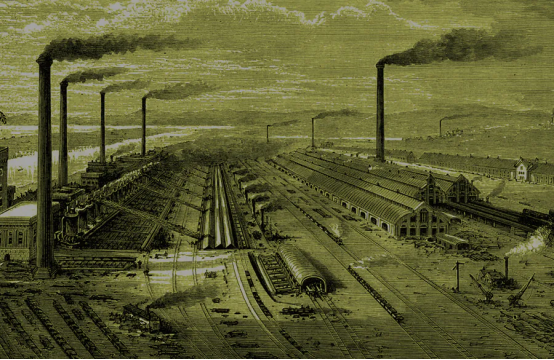
Architecture is an evolving form of thinking that carries humanity’s deep understanding and innovation of physical structures. In this process, the Industrial Revolution was undoubtedly an epoch-making turning point, which not only profoundly affected global agriculture, manufacturing, and technological progress, but also completely changed the face of architecture. From the use of stone and wood in ancient times to the popularity of steel and glass in modern times, the combination of architecture and technology has undergone earth-shaking changes. Can you imagine what today’s city skylines and skyscrapers would look like without the Industrial Revolution?
1. The Industrial Revolution and the Innovation of Architecture: The Revolution of Materials
When we look back to the late 18th century, the advent of the Industrial Revolution undoubtedly brought a huge impact to the world. In 1760, the Industrial Revolution in Britain triggered a series of leaps in productivity and technology, and architectural design also underwent earth-shaking changes. Materials such as wood and stone used in the past were replaced by new building materials such as cast iron, steel and glass.
The emergence of these new materials allows architects and engineers to break away from the limitations of traditional building materials and redefine the form, structure and function of buildings. Can you imagine how a piece of glass can become the soul of a building, or how a steel beam can support the entire skyscraper? The strength of steel and the transparency of glass make buildings not only a space for shelter and protection, but also a presentation of light, vision and sense of space.
2. Skyscrapers: How steel and glass changed the face of cities
In the second half of the 19th century, advances in steel technology completely changed the urban environment in the United States. The acceleration of urbanization has driven the demand for new building structures. As the population increases, especially in large cities, the large-scale production of steel has provided unlimited possibilities for the construction industry. The birth of skyscrapers has become a model of the combination of steel and glass. It has not only changed the city’s skyline, but also brought unprecedented architectural experience.
Remember how architects were amazed by all this? Architects before might never have thought that steel could not only support the weight of a building, but also push the structure of a building to an even higher level. The combination of steel and glass gave the building not only a strong load-bearing capacity, but also an extremely exquisite appearance. Especially in the United States, skyscrapers became a symbol of urbanization given by the Industrial Revolution.

3. “Column frame” architecture: innovative use of steel
As steel became more common, the “post-and-frame” construction method was born. Can you imagine a building that could support huge walls with steel frames that evenly distributed the weight of the building, making it more efficient and stable? Early applications included the 12-story Prudential Building in Buffalo, designed by architect Louis Sullivan. Built in 1894, this skyscraper foreshadowed the future of architecture with its soaring steel skeleton and slender appearance.
The building’s design is unique, with a slender steel frame and delicate brick cladding, reflecting the modernity of steel while retaining the elegance of traditional brick walls. Despite its modern design, its arches and brick exterior still reveal a certain retro feel, a clever balance that makes it a milestone in architectural innovation during the Industrial Revolution.
4. Eiffel Tower: The perfect combination of iron and Art Deco
While steel and glass were being used, innovations in ironmaking technology also provided new possibilities for the construction of large indoor open spaces such as bridges, train stations, and museums. The world-famous Eiffel Tower is one of the representative buildings of this period. It is not only an engineering miracle, but also an innovative display of architectural aesthetics during the Industrial Revolution. Are you curious about why the exquisite iron decorations on the tower can blend so harmoniously with the cold and hard style of the iron frame?
The Eiffel Tower was built in 1889 to celebrate the Paris Exposition. Its iron frame structure not only breaks the traditional architectural perception of materials, but also demonstrates the unlimited potential of iron as a decorative and functional building material. In particular, the application of Art Deco style makes the tower not only a symbol of the Industrial Revolution, but also a perfect combination of aesthetics and industrial technology.

5. New building structures: no longer limited to traditional forms
With the large-scale application of steel and glass, architects and engineers gradually got rid of the constraints of traditional building structures and began to explore bolder designs. Many new structural forms, such as long-span bridges and open interior spaces, also began to be widely used. Whether in train stations, museums, or other public buildings, the use of steel frames has brought unprecedented sense of space and freedom.
This structural breakthrough makes architecture more than just a pile of physical space. It is more like an artistic canvas full of possibilities, waiting for architects to fill it with steel, glass and creativity. This openness and freedom has also become the foundation for the development of modern architecture.
6. Conclusion: The future of steel and glass
Today, the combination of steel and glass is still an indispensable element in modern architecture. From skyscrapers to large commercial centers, steel and glass are not only the support of buildings, but also an important carrier of design language. It can be said that the revolution of steel and glass has not only redefined the function and form of buildings, but also opened a new era of the combination of architectural art and technology. Perhaps you have been shocked by the modern sense of a glass curtain wall building, or moved by the majesty of a steel skeleton building. The charm of these buildings is the power given by steel and glass.
Just as the Industrial Revolution brought about great changes in architecture, we can expect that steel and glass will continue to play an important role in future architectural design, bringing more innovation and surprise. How will future buildings break through the limits of technology and create more spectacular spaces? This is the charm of the continuous exploration and innovation of the construction industry.

Related Posts