Kyoto, this ancient city, has many breathtaking Buddhist buildings, and Kinkakuji Temple and Kiyomizu Temple are undoubtedly the two most representative ones. These temples not only show the essence of Japanese Buddhist culture in architecture, but also make people deeply appreciate the interweaving of time and history. Every time I stand in front of Kinkakuji Temple or stroll on the stage of Kiyomizu Temple, I can’t help but sigh: Architecture is really a great container that carries history and culture.
The magnificence and heritage of Kinkakuji Temple
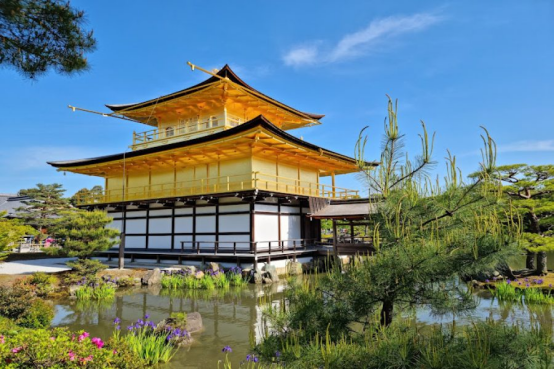
Kinkakuji Temple is perhaps one of the most photogenic buildings in the world. At first glance, you may be mesmerized by the dazzling gold foil. But if you take a closer look, you will find that the history behind it is much deeper. Kinkakuji Temple is not only the luxurious residence of Ashikaga Yoshimitsu, but also a Zen temple that hides profound philosophical and cultural connotations.
The History and Changes of Kinkakuji Temple
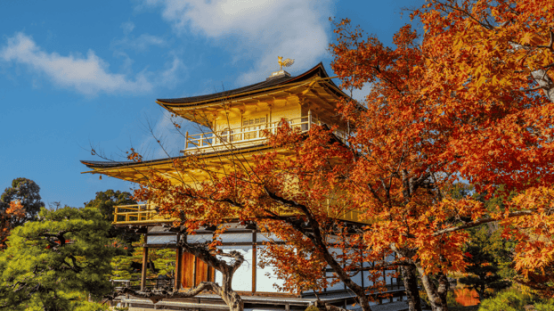
Kinkaku-ji Temple was originally built in 1397 as the retirement villa of Shogun Ashikaga Yoshimitsu. After Yoshimitsu’s death, this luxurious residence was transformed into a Zen temple called “Rokuenji Temple”, the most distinctive of which is the glittering three-story pavilion – the Golden Pavilion.
However, the temple wasn’t always this glorious. In 1950, a frustrated monk set fire to the temple, nearly destroying the entire building. Fortunately, in 1955, the temple was restored to its original glory. Standing in front of this magnificent building, I couldn’t help but be moved by its resilience and rebirth.
Architectural style and cultural symbolism
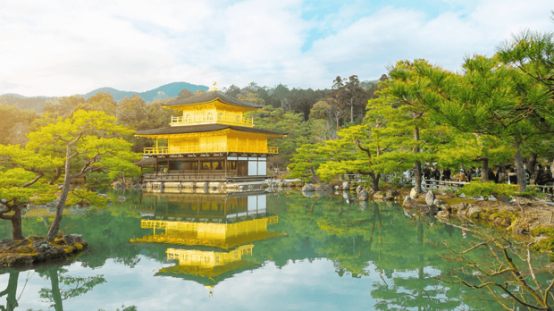
The architectural style of Kinkakuji Temple is diverse. Each floor of the temple adopts a different architectural style. The first floor “Hosuin” is in the Shinden style, the second floor “Chō-on-dō” is in the Samurai style, and the top floor “Kurkyō-chō” is in the Zen style. This design not only represents the exquisiteness of architectural technology, but also symbolizes the integration and far-reaching influence of Kitayama culture at that time.
Every time I stand in front of the Golden Pavilion, I am deeply attracted by its exquisiteness and splendor. The golden glow not only symbolizes power and glory, but also a spiritual symbol, reminding us that even in the most brilliant glory, we need to maintain inner peace and depth.
Kiyomizu-dera Temple: A harmonious blend of history and nature
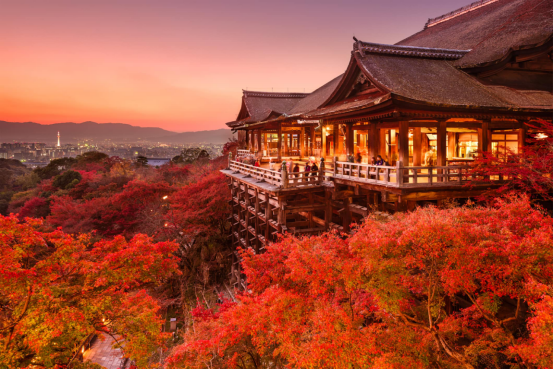
When it comes to Buddhist architecture in Kyoto, Kiyomizu Temple is undoubtedly another legend that cannot be missed. Compared with the splendor of Kinkakuji Temple, Kiyomizu Temple has a more harmonious beauty of nature and humanity. Every time I visit Kiyomizu Temple and walk past the towering wooden stage, I am shocked by the blend of grandeur and tranquility.
The Architecture and Design of Kiyomizu-dera Temple
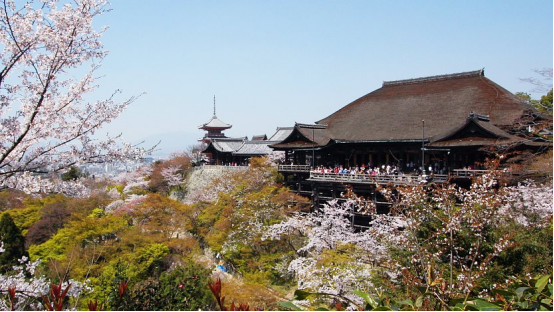
The most famous thing about Kiyomizu Temple is its wooden stage. The stage is high on the hillside. Looking down, you can see the lush cherry trees and maple trees in the valley. They show different colors with the seasons: a sea of pink cherry blossoms in spring and a world of fiery red maple leaves in autumn. Standing on the stage, I often sigh that the combination of architecture and nature can be so harmonious.
What is amazing is that the entire stage was built without the use of nails, and all the wood was tightly combined, symbolizing the exquisite craftsmanship of Japanese craftsmen. The small statue of the eleven-faced thousand-armed Guanyin enshrined in the main hall makes people feel the depth and compassion of Buddhism.
The historical and cultural significance of Kiyomizu-dera Temple
The history of Kiyomizu-dera Temple dates back to 780, almost as old as Kyoto. It was originally built as a Buddhist temple, and later underwent several reconstructions and restorations until it became what we see today. The most unique thing about the temple is its close connection with love. The Jishu Shrine, located behind the main hall, is dedicated to the god of love and marriage. It is said that worshippers can obtain a happy love by closing their eyes and walking across the two stones in front of the shrine. Some people choose to let others guide them to complete this challenge, implying that love also needs the help of others.
The Otowa Falls at Kiyomizu Temple is a highlight of the temple. The water of the waterfall is divided into three streams, each representing a different wish: longevity, academic success, and a happy love life. Whenever tourists drink the water, I often think that this water flow is not only a gift from nature, but also a symbol of the Buddhist spirit – three wishes, three blessings.
Contrast and emotional fluctuations
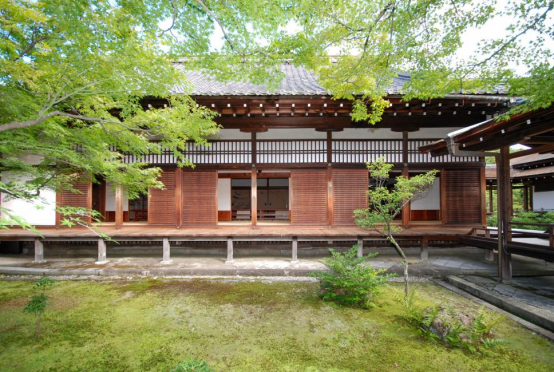
In my opinion, although both Kinkakuji Temple and Kiyomizu Temple are outstanding representatives of Buddhist architecture, their styles and temperaments are completely different. Kinkakuji Temple represents the symbol of power and wealth, and its golden brilliance makes people dazzled; while Kiyomizu Temple shows more of the harmonious coexistence of man and nature, and its wooden stage is integrated with the mountains and rivers, giving people a sense of tranquility and introspective power. The beauty of Kinkakuji Temple is the external splendor, while the beauty of Kiyomizu Temple is the inner tranquility and depth.
Summarize
Whether it is the golden glitter of Kinkakuji Temple or the natural tranquility of Kiyomizu Temple, these two Buddhist buildings in Kyoto show the profound heritage and cultural charm of Japanese Buddhism in different ways. From historical changes to architectural art, to spiritual culture, they are all symbols of the cultural pulse of the city of Kyoto. If you haven’t been to Kyoto yet, then Kinkakuji Temple and Kiyomizu Temple are definitely destinations you can’t miss. Every visit will give me a new understanding and shock, and also let my heart get a moment of peace.

Related Posts