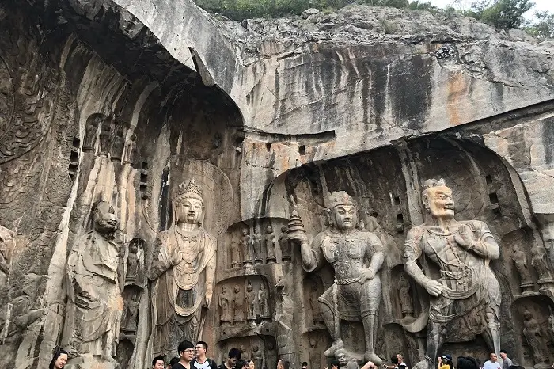
Located in Luoyang, Henan Province, close to the famous Yi River, Longmen Grottoes represent the pinnacle of ancient Chinese stone carving art. Dating back to 493 AD, it has survived for thousands of years and is a treasure of world cultural heritage. Imagine: a place with more than 2,345 niches, 100,000 Buddha statues, and countless inscriptions. This is more than just a grotto, it is a bridge in time, connecting the past and the present, culture and faith.
In 2000, Longmen Grottoes was listed as a World Cultural Heritage by UNESCO. It represents an outstanding fusion of Buddhist art and cultural exchange. It is not only a precious cultural heritage of China, but also a part of human history, witnessing the leap and evolution of human civilization.
The interweaving and changes of artistic styles
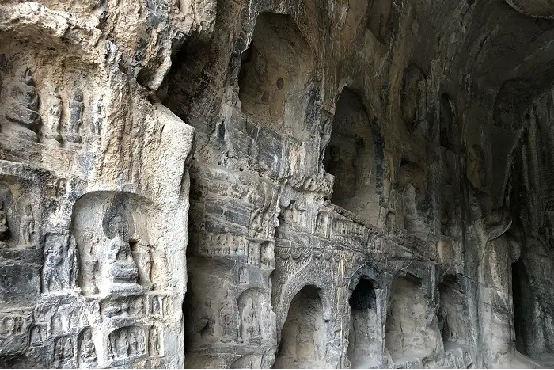
In the Longmen Grottoes, you can feel the fusion of historical fluctuations and artistic styles. The early cave sculptures were deeply influenced by Indian Buddhist art. The figures were simple and flat, as if they were just symbols of faith rather than vivid life. However, when time entered the Tang Dynasty, the details of these sculptures became richer and the postures became more vivid. The delicate expressions and dynamic body postures made people feel as if they could feel the inner world of Buddha and Bodhisattva.
The most striking thing is the change of the image of Buddha. From the initial simple shape to the gorgeous decoration of the Tang Dynasty, each Buddha statue tells the collision and interweaving of religious beliefs and the trend of the times. What is even more amazing is that not only the Buddha statues are constantly changing, but also some carved sponsors – such as emperors, nobles and monks – gradually appear on the stone wall, showing the relationship between society and religion at that time. Aren’t these a window for us to peek into history?
Three Reasons to Visit Longmen Grottoes
Appreciate the diversity and depth of art
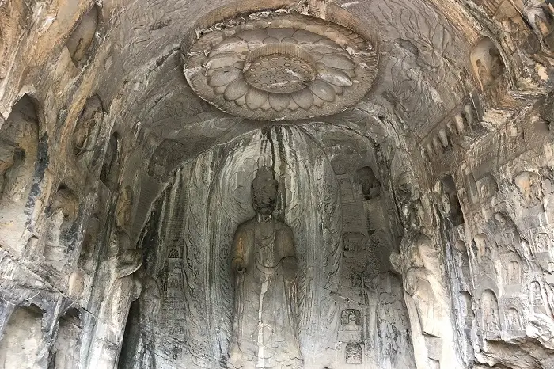
When you stand in front of those carved Buddha statues and feel the artistic evolution of the Buddha statues from simple to complex, from static to dynamic, you can’t help but sigh: This is not just sculpture art, but also a display of human thoughts and beliefs! There are about 110,000 Buddha statues in Longmen Grottoes, the smallest is only a few centimeters high, and the largest can reach an astonishing 17 meters. Each Buddha statue has its own face, expression, and posture, which seems to convey its own emotions and stories. You will find that in these Buddha statues, the boundary between art and belief has almost become blurred. They are representatives of art and the embodiment of the spiritual world.
Experience the history and culture of ancient China
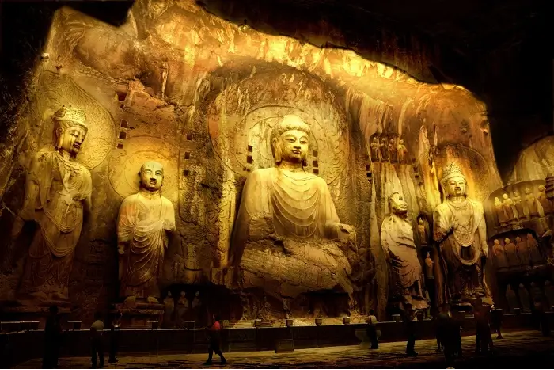
Longmen Grottoes is not only a treasure house of art, but also a mirror of Chinese history. From the Northern Wei Dynasty to the Tang and Song Dynasties, each grotto records the vicissitudes and historical trajectory of that era. In the inscriptions, we can see the ambitions of the emperors, the donations of the nobles, the dedication of the monks, and the faith of ordinary people. Here, you can not only appreciate the beauty of Buddhist art, but also gain an in-depth understanding of the social, political and religious changes in ancient China. Longmen Grottoes tells us: every stone carving is a historical witness of that era.
Enjoy the natural scenery and peace of mind
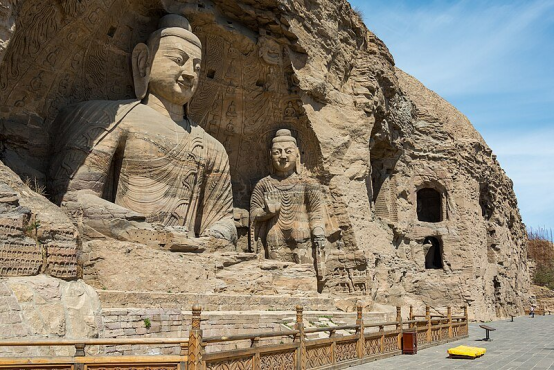
Who doesn’t want to feel the tranquility and peace in the beautiful natural scenery? Longmen Grottoes provides such a great experience. Surrounded by hills, clear waters and lush vegetation, the grottoes are picturesque. Stroll among these ancient stone carvings, listen to the birds singing, see peacocks dancing on the hillside, and even occasionally see squirrels or monkeys jumping between branches. The tranquility here seems to slow down the pace of time. You can truly relax and experience a spiritual baptism here.
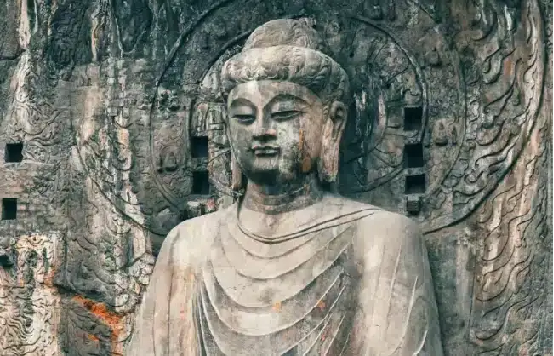
Sculpture and Calligraphy Art of Longmen Grottoes
The carvings of Longmen Grottoes are not only the art of Buddha statues, but also the precious heritage of countless calligraphy and inscriptions. These inscriptions not only record the teachings of Buddhism, but also the social contributions of people from different eras. Imagine standing in front of these inscriptions. Would you be shocked by some of the words written by famous calligraphers? They are not only a testimony of culture, but also the pinnacle of calligraphy art. The beautiful fonts and delicate strokes in the inscriptions seem to be telling the story of history.
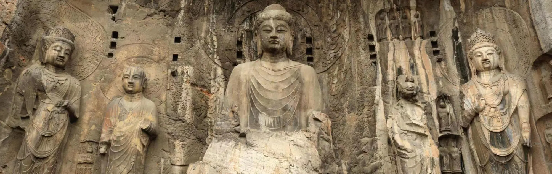
Fusion of culture and architecture
The architectural design of Longmen Grottoes is not only a pile of traditional Chinese elements, but also incorporates Greek Ionic columns, which is amazing. These columns complement the architectural forms of India and China, presenting a perfect cross-cultural fusion. Every stone carving and every column seems to be a symbol of the intersection of Eastern and Western civilizations, revealing the far-reaching influence of cultural exchanges along the Silk Road.
You will find that Longmen Grottoes is not an isolated artistic heritage, but a product of the interweaving of cultures and beliefs from all over the world, and even a microcosm of the intersection of civilizations. It is not only a heritage of China, but also a treasure of the world.
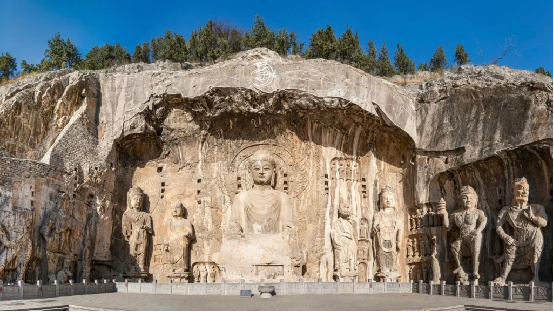
Conclusion: Immerse yourself in the charm of Buddhist history
Longmen Grottoes is not only the pinnacle of Chinese Buddhist art, but also an important part of the spiritual and cultural heritage of all mankind. Its sculptures, architecture, inscriptions, and the surrounding natural landscape together constitute a perfect symphony of history and art. If you want to gain a deeper understanding of ancient Chinese culture, religion, and art, then Longmen Grottoes is undoubtedly a sacred place you cannot miss. Walking among these ancient grottoes, you can not only feel the shock of art, but also touch the pulse of history, as if traveling through time and space and returning to that glorious era.
Longmen Grottoes is not only a historical relic, but also a spiritual habitat. Every visit will allow you to find a dialogue with history, culture, and your own soul among the deep stone walls.

Related Posts