As one of the most influential religions in the world, Christianity’s symbols are not just patterns and logos – they represent faith, history, culture, and even emotions deeply rooted in the heart. Every church, especially every detail in it, hides a profound story. Have you ever noticed the symbols of the church? They are not designed casually. Every carving and every pattern is a window of faith. Through them, we seem to feel the breath of God, and even the power of faith quietly surging in our hearts.
The depth of Christian symbolism is truly astounding. Today, let us walk through these symbols together to understand their origins, meanings, and even how they affect our faith life today.
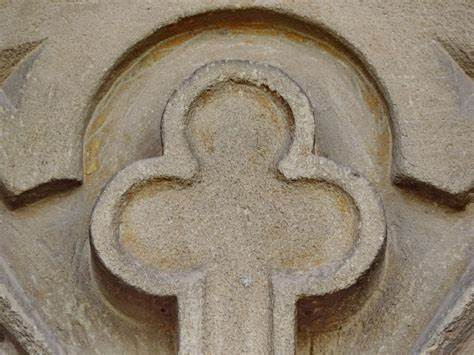
The Cross: A Symbol of Redemption and Sacrifice
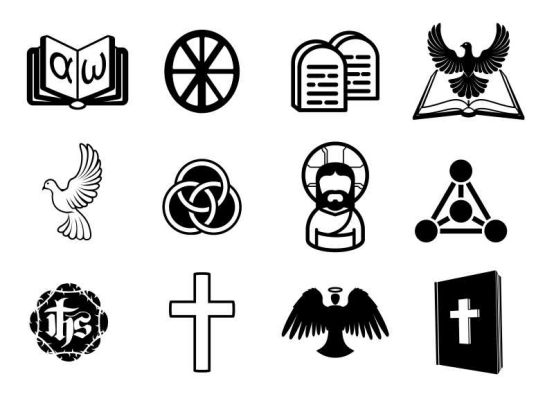
The cross, as the most representative symbol of Christianity, does it immediately remind you of the cross of Jesus? This seemingly simple shape carries such a profound meaning. Think about it, the cross was not originally a symbol of faith. It was an instrument of torture in ancient Rome – an extremely cruel way of death. Jesus was nailed to such a cross, suffered humiliation and torture, and even died on it. This is an unimaginable pain.
But it is because of Jesus’ sacrifice that the cross has become a symbol of the Christian faith. Can you imagine? A symbol that was once filled with the shadow of death has become a symbol of victory, redemption and hope. It reminds us that Jesus’ death is not the end, but a new beginning – from this comes the hope of resurrection.
Different Christian denominations have different interpretations of the cross. Catholics like to depict the crucifixion of Jesus on the cross, which makes them feel awe every time they worship and recall the sacrifice Jesus made for all mankind. Protestants, on the other hand, prefer to use a blank cross, symbolizing the resurrection of Jesus – a symbol of victory that brings endless light.
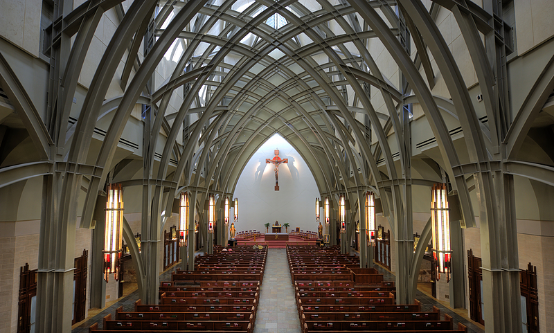
Ichthys: The First Mark of Faith
You may ask, “How does the fish symbol have anything to do with the Christian faith?” If you’ve ever seen a fish symbol on the rear window of a car, you may have wondered about it. In fact, this simple image has a very profound historical significance.
In the early days of Christianity, the Roman Empire persecuted Christians cruelly. In order to avoid being discovered, Christians often used the “fish” pattern to identify each other. Ichthys is the abbreviation of “Jesus Christ, Son of God, Savior” in Greek. In that difficult era, fish became their secret symbol, which symbolized the persistence of faith and the unity of life and death.
Today, this symbol is not just a legacy of the past, it still appears in our daily lives, reminding us that no matter how the environment changes, the Christian faith remains the same. Can you feel the power that transcends time? Every time we see the fish, it seems to bring us back to the history of persecution but still persisting in faith.
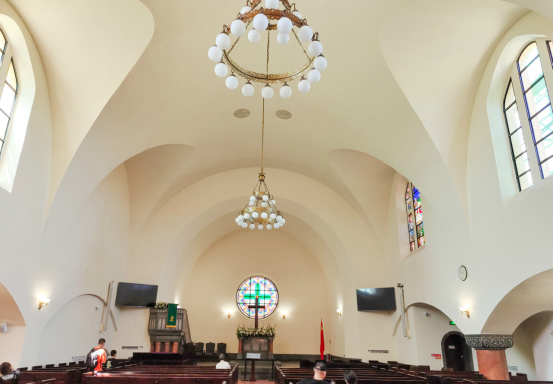
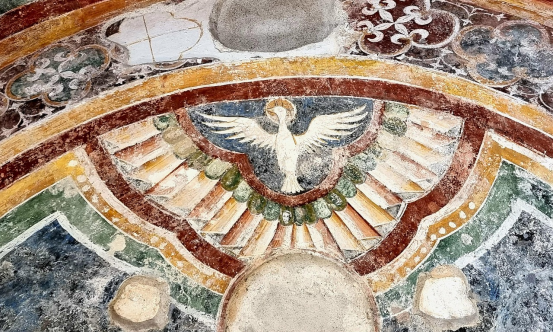
The Dove: Divine Peace and Purity
We often see doves on church walls, especially near the altar. The dove, a seemingly simple animal, has a huge symbolic meaning. It represents the coming of the Holy Spirit, which descended on Jesus like a dove when he was baptized. However, the dove is not only a symbol of this moment, it also carries another profound meaning – peace and purity.
Have you ever wondered why doves always carry olive branches? That’s because of the story of the dove in Genesis – it brought back the olive branch, which meant that the flood on Noah’s Ark was finally over, symbolizing the arrival of peace. The dove is not only a symbol of the Holy Spirit, it also reminds every Christian to maintain the purity of their hearts and face the world fearlessly and purely like a dove.
Whenever we see this dove, don’t we feel a desire for peace and purity in our hearts?
The Lamb: Love Sacrificed for the World
“Lamb of God” has a profound meaning in Christianity. Have you ever seen a lamb holding a victory banner and radiating light in church artwork? It is usually surrounded by light, as if representing an incomparable holiness and victory.
Behind this symbol is Jesus’ sacrifice. When Christ is called the “Lamb of God,” it not only means Jesus’ sinlessness and innocence, but also represents that he sacrificed himself for the sins of all mankind. Imagine this pure lamb, carrying the sins of all mankind, went to death, but he was not defeated by death, but defeated it, bringing hope of resurrection and redemption.
The image of the lamb reminds us that love and sacrifice are the core of faith. Every time we see this lamb, do we also reflect on what we can do for others?
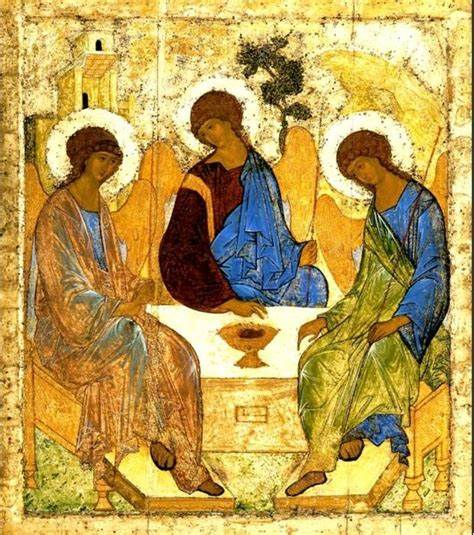
Trinity: One God, Three Persons, the Mystery of Faith
The Trinity is the most difficult to understand yet the most central part of Christian doctrine. The unity of the Father, Son and Holy Spirit, do you also find this concept elusive? Different symbols interpret this mystery, sometimes a clover with three interlocking rings, sometimes a complex triangle structure, but they all have one thing in common: one God, three Godheads.
What is the profound meaning of this doctrine? It tells us that God is not just one God, but a unity composed of three different persons. The Father, the Son, and the Holy Spirit are independent of each other, but closely connected, representing the completeness and omnipotence of God. This is an eternal mystery, and this mystery runs through the entire history of the Christian faith.
Conclusion: Behind every symbol is a living story
Every Christian symbol carries a historical story and the power of faith. When you walk into a church and see the beautifully carved crosses, doves, or lambs, have you ever stopped to imagine the meaning behind them?
The symbols of Christianity are no longer just a historical legacy. They are lighthouses that guide believers toward light and hope. And for each of us, the meaning of these symbols may no longer be just a religious symbol. They have become our spiritual guide to understand the world and face life.

Related Posts