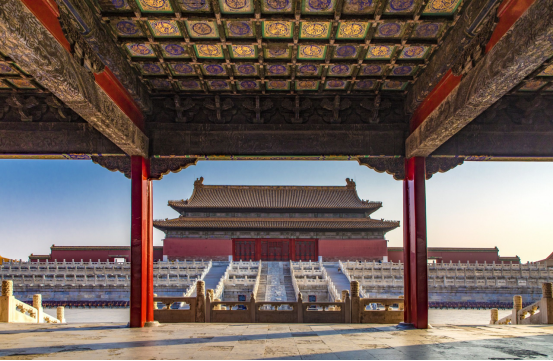
The Forbidden City, once the residence of 24 Chinese emperors, is not only the largest ancient architectural complex in China, but also one of the most magnificent and best-preserved imperial palaces in the world. This huge palace covers an area of more than 720,000 square meters, with a 10-meter-high wall and a 52-meter-wide moat. There are 980 buildings and 8,704 rooms inside. How can such a huge and magnificent palace not make people marvel at the history, culture and symbol of power behind it?
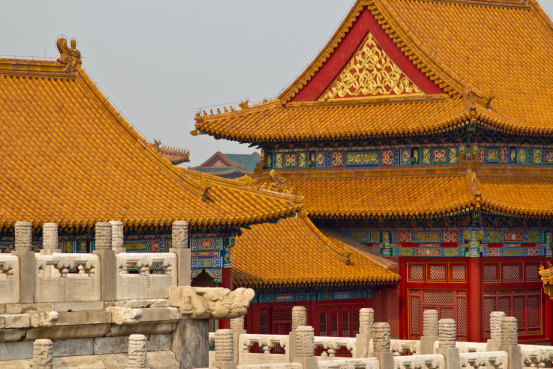
The Symbolism of the Forbidden City: Purple and Centralized Design
Of the four gates, the most well-known are the Meridian Gate in the south and the Shenwei Gate in the north, which provide visitors with access to the Forbidden City. The most symbolic is Tiananmen, which represents the dignity and glory of the empire and is the “face” of the Forbidden City, making all who enter hold their breath and feel awe.
The Chinese name of the Forbidden City, “Purple Gold City”, may sound simple, but it is full of profound cultural implications. Purple has been a sacred symbol in Chinese culture since ancient times, representing immortality and divinity, and is even closely linked to the North Star. So why “purple”? Its choice is not just a color preference, but also a symbol of the emperor’s authority and a metaphor for the supreme position between heaven and earth.
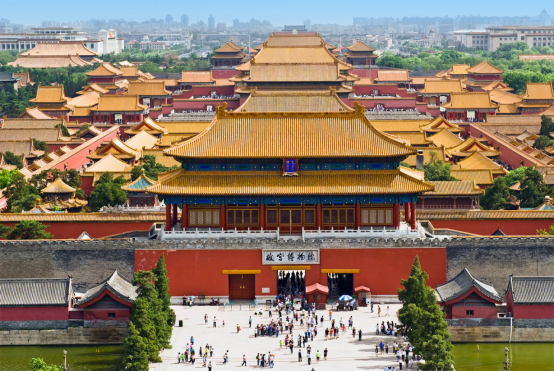
The ruling center: spatial layout and the sacred status of the emperor
The most striking thing about the layout of the Forbidden City is its perfect central axis. This line is not just a physical dividing line, it is actually a manifestation of cosmic order and a symbol of the perfect combination of order between nature and society. Through this design, the emperor is placed at the center of the entire universe. You can’t help but wonder: In this space, how does the emperor perceive and control the fate of the entire empire through his existence?
In traditional Chinese culture, the north represents supreme power. The emperor stood high in the Forbidden City, looking down at the south, while his subjects looked up from the courtyard on the ground. This spatial relationship profoundly reflects the strict hierarchy of ancient Chinese society. Every emperor looked down on the world like a god, and the dignity they possessed was simply unimaginable!

From a center of power to a treasure house of art: the modern transformation of the Forbidden City
Today, the Forbidden City is no longer a symbol of power. It has become a world-renowned museum, displaying tens of thousands of precious cultural relics and collecting more than 1.05 million pieces of art, which can be called a “treasure house” of Chinese cultural relics. In this former center of power, we can now get a glimpse of the glory and splendor of China’s long history. Think about how many stories and legends are behind these cultural relics!
The Hall of Supreme Harmony and the three administrative halls, places that once witnessed the ups and downs of the emperor’s fate, still stand majestically and magnificently in the Forbidden City. Standing here, you can’t help but ask: Did the former emperor ever express his profound thoughts about the future in front of everyone in this empty square?
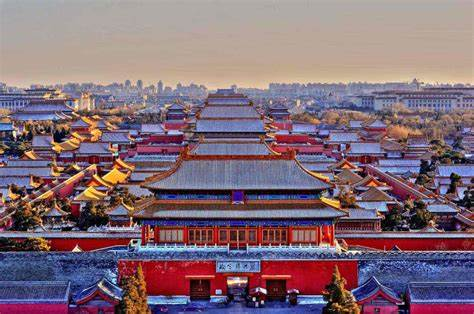
After all the storms, the Forbidden City still stands firm
Over time, the Forbidden City has gone through many ups and downs, especially after the Chinese Revolution in 1911, when it ceased to be the seat of government for the Qing Dynasty. However, even under the invasion of many wars, the Forbidden City still stands, like an ancient guardian, silently witnessing the changes in Chinese history.
Can you imagine? Even the last emperor of the Qing Dynasty, Puyi, spent the rest of his life here. However, even though he spent his last years in this palace, the power, splendor and sacredness it symbolized had long since dissipated with the changing times.
Today, the Forbidden City, as a museum and historical site, is still changing. Every restored brick and tile, every artifact on display, is part of history. It is more than just a palace, it is a “time capsule” of China’s past and an important window for the public to understand ancient Chinese culture. How should we understand the significance of this historical site?
The Forbidden City is not only the pinnacle of ancient Chinese architecture, it is also a living history book. Everyone who walks into it will be infected by its rich cultural atmosphere. It has witnessed the glory of the past and also carries the hope of the future. In this palace full of mystery and power, you can’t help but sigh: history is really an everlasting myth, and the Forbidden City is the eternally brilliant chapter in this myth.

Related Posts