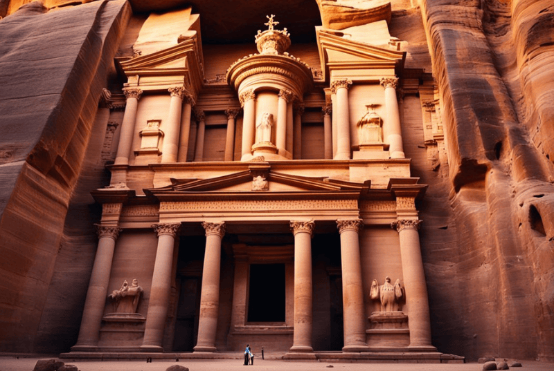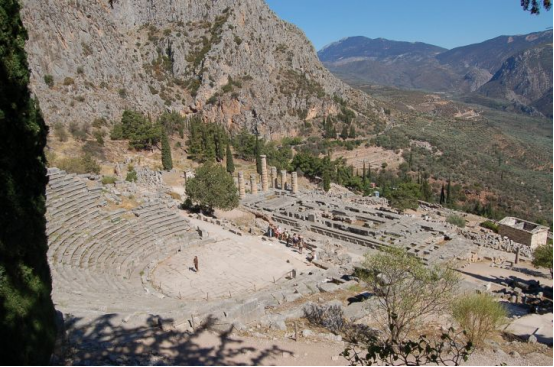
The Temple of Delphi, located near today’s Delphi Village, was once one of the most important sacred sites in ancient Greece. Imagine that after thousands of years of ups and downs, this land still stands tall and still carries the memory of ancient civilization. Have you ever wondered how oracles, wars, and beliefs are intertwined in this land? Today’s Delphi ruins are the sedimentation of this history.
The History of the Temple of Apollo
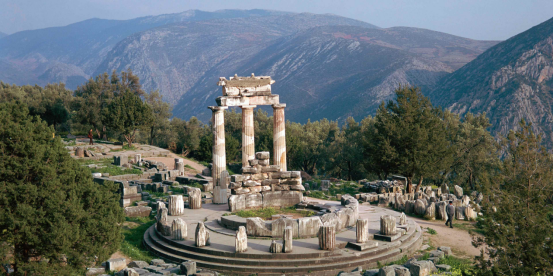
Early version of the temple
The history of the Temple of Delphi dates back to the 7th century BC. Initially, it was a temple built of wood, but over time, a stone version gradually appeared. The first stone temple was built in 650 BC, but it was destroyed by fire just a hundred years later, which is also one of the fates of ancient buildings. Can you feel whether this ruin has made countless ancient Greeks feel helpless and heartbroken? After all, great history often goes hand in hand with destruction.
Construction and Disaster of the Second Temple
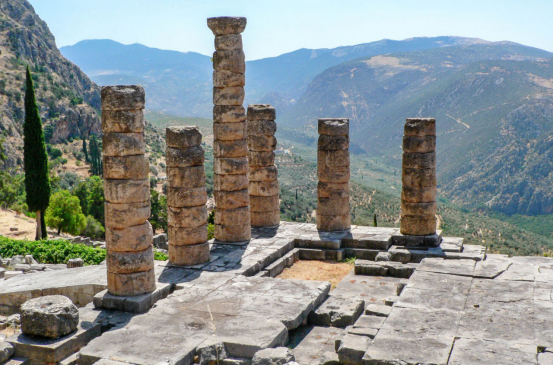
Construction of the second temple began in 506 BC, funded by all Greek city-states. It was larger than the previous temple, with Doric columns and magnificent architecture. However, in 373 BC, the temple was once again hit by an earthquake and reduced to ruins. Did this disaster make the ancients question the eternity of the “temple”? Was it the lack of protection from the gods, or was it just a trick of fate?
Final Completion of the Third Temple
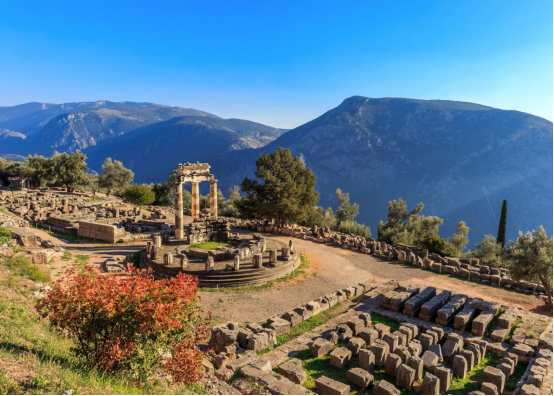
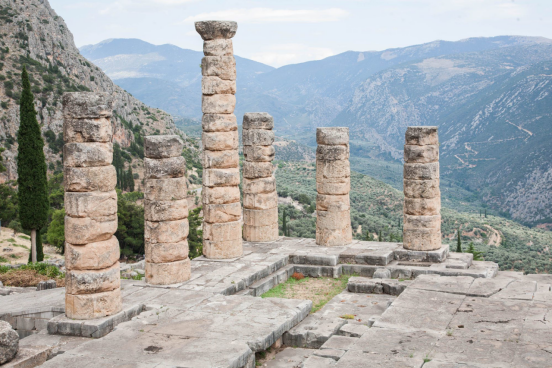
The third temple was finally completed in the 3rd century BC, despite wars and political turmoil. This temple was built not only to welcome believers, but also as a symbol of Greek world culture. It is 58 meters long and 21 meters wide, majestic and magnificent. Although many buildings have collapsed today, some columns and altars are still standing. Imagine what kind of history and stories these remaining buildings carry? Every column is a trace left by time.
The Pythia and the Mystery of the Oracle
The Origin of Oracles and Sacred Rituals
The most famous existence of the Temple of Delphi is the oracle. Pythia, the priestess, is the object of everyone’s seeking guidance from God. In the history of oracles, Pythia is not just a priestess, she symbolizes the bridge to the gods. Can you imagine how people in that era changed their destiny through the prophecy of a woman? Everyone who came here brought expectations for the future and expected to get answers from Pythia.
The strange way of delivering the oracle
The oracle of the Pythia was not simple and clear, but full of mystery and contradiction. Her words were sometimes ambiguous and sometimes contradictory, and the true meaning could only be understood through the interpretation of priests. At that time, the language of the oracle was often so elusive. Let me ask, are the oracles really so mysterious? Or is the “oracle” understood by the ancients actually a prophecy with profound symbolic meaning?
The Glory and Decline of the Temple of Delphi
The Golden Age of Oracles
The Delphic Oracle reached its peak between the 6th and 4th centuries BC. Ancient Greek leaders, generals, and even ordinary people came to consult the Pythia. At critical moments in war and politics, they hoped to find the basis for decision-making from the revelation of the gods. However, as history changed, the reputation of the Temple of Delphi gradually declined. The Pythia Oracle also gradually lost its authority during the Roman period. Did the influence of the oracle begin to fade due to changes in political power?
The decline and abandonment of Delphi
In the 4th century AD, the Byzantine Emperor Theodosius announced the end of the oracle activities, and the Delphi Temple and statues were destroyed. You may ask, is this decision a destruction of faith or an inevitable choice of the times? In any case, the sacred status of Delphi gradually declined with the end of the oracle.
In the following centuries, the ruins of Delphi were repeatedly attacked by war and looting. In particular, during the Roman period, Lucius Cornelius Sulla plundered Delphi and completely destroyed this sacred place. Sadly, with the rise of Christianity, Delphi was completely abandoned and became a ruin.
The ruins of Delphi – witness of history
Today, standing at the ruins of Delphi, you can feel the passage of time from ancient times to modern times. Although the temples have disappeared, the ruins are still treasures of culture and history. Can you vaguely feel the sacredness and glory of ancient Greece from these ruins?
Although Delphi has declined, it still bears witness to human history and culture. This land has inspired so many great dreams and ideals, and shaped so many beliefs and destinies. Although Delphi today has lost its former glory, it still makes everyone who sets foot on this sacred land feel that those myths and legends still stir up waves in our hearts.
Related Posts