For hundreds of years, Roman artworks have not only shaped the context of global urban planning and architecture, but have also become a treasure of cultural development around the world. Ancient Rome’s achievements in architecture, sculpture and painting have not only profoundly influenced ancient civilization, but also provided inspiration for artists in the Renaissance, Baroque and even Neoclassical periods. In this eternal city, there is a building that spans the long river of history, witnesses the glory of the empire, and is engraved with the splendor of ancient civilization – this building is the Colosseum.
Origin and construction: witness of history
The construction of the Colosseum is full of political, cultural and historical symbols. In 70 AD, Vespasian, the emperor of the Flavian dynasty, ordered the construction of this magnificent building. Imagine that Rome at that time was at a moment of change: the prosperity of the empire and the shadow of tyranny were intertwined. The Colosseum was not just an arena for entertainment, but it contained deeper political intentions.
You may ask, why was the Colosseum built on the ruins of Nero’s luxurious palace, Domus Aurea? Vespasian obviously used this magnificent building to erase the extravagance of the tyrant Nero and show the people a new political and cultural order. In this way, he returned the land that once belonged to the emperor to the people and redefined the meaning of “power”.
Architectural significance: the splendor of a masterpiece
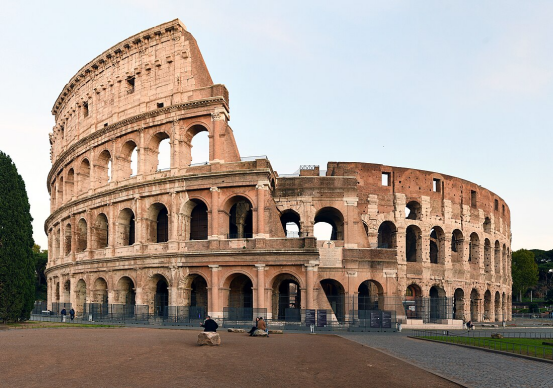
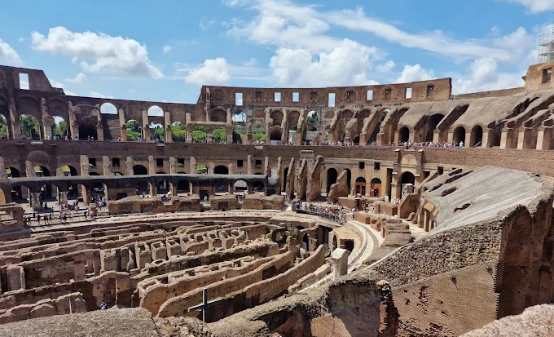
Standing in front of the Colosseum, you will feel an incomparable shock. Its oval structure is 189 meters long, 156 meters wide and 48 meters high, which can accommodate 50,000 to 80,000 spectators. As the largest arena in ancient Rome, it is not only a building, but also a symbol of ancient Roman culture and a witness to the glory and history of the empire.
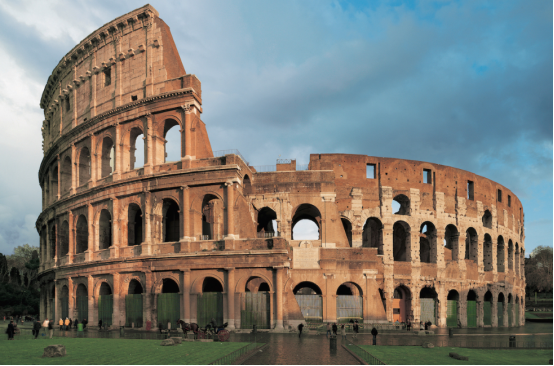
The construction technology of the Colosseum, especially the use of concrete, is a major breakthrough in the history of architecture. This technology allows the Colosseum to withstand tremendous pressure and impact, making the design of vaults and arches possible, creating a unique visual shock. The Colosseum has four layers of facades. The first three layers are arranged with Doric, Ionic and Corinthian semi-circular columns, showing the pinnacle of ancient Roman architectural aesthetics. The solid fourth layer of walls, like a cornerstone of history, silently witnesses the passage of time.
Restoration and modern significance: guardians across time and space
The history of the Colosseum is not just an ancient relic, but also a cultural journey spanning thousands of years. Since the 18th century, restoration work has been carried out continuously, especially the restoration project in the 1990s, which gave this ancient building a new lease of life. After many restorations and reinforcements, the Colosseum still stands in the center of Rome and has become a destination for tourists from all over the world.
Today, the Colosseum is not only part of the world’s cultural heritage, but also one of the most important symbols of Rome. Every year, thousands of tourists come here to stand in front of this majestic building and feel the shock of traveling through time and space. It not only tells the history of ancient Rome, but also becomes a bridge for modern people to understand and touch ancient culture.
Influence on Modern Architecture: The Power of History
Have you ever seen a building similar to the Colosseum anywhere else? In fact, the design of the Colosseum was far-reaching, and its vaults, arches, and concrete structure technology provided a strong foundation for later architectural innovations. Whether it is in ancient arenas, theaters, or modern government buildings, the design concept of the Colosseum has left a deep imprint.
For example, the U.S. Capitol in Washington, D.C., the Pantheon in Paris, and even the Arena in Verona, Italy, all have the shadow of the Colosseum design. All of these magnificent buildings have inherited the Colosseum’s sense of space and order. This architectural concept inherited from ancient times is still an indispensable source of inspiration for modern architecture.
The History of the Colosseum: A Cultural Symbol That Never Fades
Although earthquakes and stone robbers have destroyed part of the Colosseum’s structure, it still stands in Rome and has become one of the representative buildings of the Roman Empire. Every year, the Pope starts the Via Dolorosa procession near the Colosseum. This close connection with the Catholic Church has also made the Colosseum a symbol of spirit and culture. You can see the Colosseum on the Italian 5 euro cent coin, which conveys the charm of this ancient building in another way.
In 1980, UNESCO listed the Colosseum as a World Cultural Heritage Site, giving it a cultural significance that transcends time and space. Today, it is not just a building, it is a witness to history and the embodiment of awe and reverence in the hearts of every visitor who sets foot in it.

Related Posts