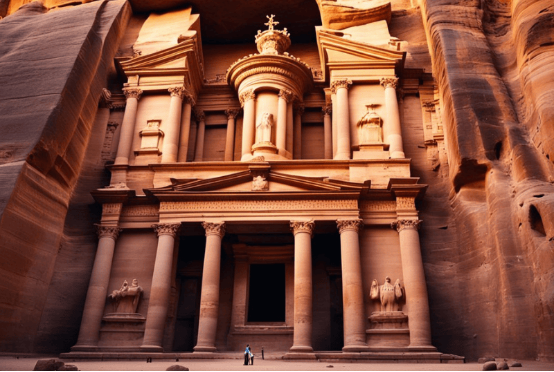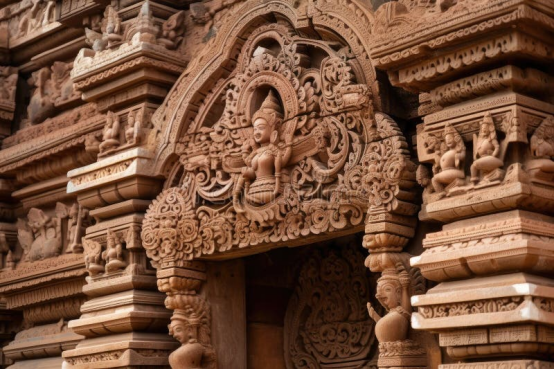
The relationship between mathematics and architecture has been quietly formed as early as the ancient civilization period. Have you ever wondered: How can those magnificent ancient Greek temples and Egyptian pyramids stand so perfectly for thousands of years? They are not only a symbol of human engineering skills, but also the crystallization of the perfect interweaving of mathematics and art. Early architects did not have modern computing tools, but they relied on the power of mathematics to create amazing architectural miracles. This tradition was inherited and developed during the Renaissance. Architecture is not just about building a space, but also about pursuing “harmony” and “beauty” through mathematical language.
Ancient Architecture: The Birth of Number and Proportion
From ancient Greece to ancient Egypt, the influence of mathematics on architecture cannot be ignored. Ancient Greek architects not only enhanced the stability of the structure through the design of geometric figures, but also created many buildings that shocked the world through their precise understanding of proportions and aesthetics. For example, the columns of the Parthenon are not only tall and straight, but their proportions and symmetrical designs also give people a unique visual impact. Some scholars even believe that the mathematical proportions and geometric structures in these designs are well thought out and not just coincidental.
Even more surprising is that ancient architects also used knowledge of astronomy to design the alignment of buildings, so that the orientation of many buildings coincided with astronomical phenomena. The Egyptian pyramids, Mayan temples, and even Stonehenge in ancient Britain are all examples of the perfect combination of architecture and astronomy. So, weren’t these ancient architects geniuses? How did they create such precise designs without the support of modern technology?

The Mathematical Revolution of the Renaissance: Return and Innovation
During the Renaissance, the relationship between architecture and mathematics reached a new level. Renaissance architects not only drew inspiration from ancient Greece and Rome, but also added their own innovations. During this period, mathematics became the core language of architectural design. Can you imagine? Renaissance architects not only designed the appearance of buildings, they even began to re-examine the structure of buildings, considering the deep connection between perspective, proportion and geometry.
The revolutionary application of perspective was a major breakthrough in Renaissance architectural design. As a result, architecture is no longer just a single spatial structure, but a work of art that interacts with the viewer’s perspective, light and shadow. Architects use mathematical methods to ensure that buildings can show the most perfect proportions and views from all angles. The use of perspective not only enhances the beauty of the building, but also greatly improves its functionality.
At the same time, mathematical ratios such as the golden ratio were also more widely used during the Renaissance. Have you heard of this magical ratio? It is everywhere in nature, from the growth of plants to the structure of the human body, and even the design of buildings. The golden ratio controls everything invisibly. Why are architects so obsessed with this ratio? Because it is considered the “most perfect” ratio, which can bring visual harmony and beauty. No wonder, Renaissance architecture not only pursues innovation in form, but also achieves unprecedented precision in proportion and design.
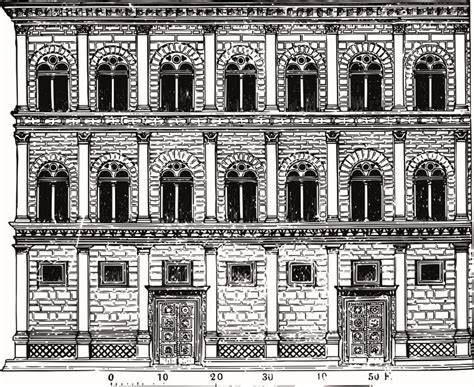
Through mathematics, architecture becomes art
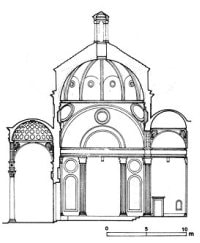
When we look back at Renaissance architecture, we cannot ignore the profound influence of mathematics. Architecture is not just about shelter, it also requires beauty, order and harmony. Renaissance architects made architectural design more scientific and artistic through the study of geometric shapes and mathematical proportions. For example, the ideas put forward by Piero della Francesca greatly promoted the development of architectural design. He firmly believed that architects must draw accurate sections, plans and perspectives to better express their design concepts. Through these precise mathematical drawings, architects can ensure that the building is perfectly presented from different perspectives.
These drawings are not just simple architectural sketches, they are the bridge between architects and mathematics and art. Through mathematical formulas and proportional calculations, they ensure that every space and every column can be properly integrated into the overall design. Isn’t this the charm of architecture? Architecture, through the language of mathematics, perfectly combines art and function.
Conclusion: The Eternal Connection between Mathematics and Architecture
During the Renaissance, the combination of mathematics and architecture not only promoted the advancement of architectural technology, but also provided a new perspective for architectural aesthetics. Today, when we walk into those ancient architectural sites, we are not only appreciating the magnificent buildings, but also feeling the profound mathematical ideas contained in them. From ancient Greece to the Renaissance, and then to modern architecture, we can clearly see that mathematics has always been an indispensable cornerstone in architectural design.
However, can today’s architectural design still fully integrate the concepts of mathematics and geometry as in the past? With the advancement of technology, can we still use simple numbers and proportions to create architectural miracles that are both beautiful and practical, just like ancient architects? Perhaps, future architecture will continue this tradition and demonstrate the power of mathematics in a more innovative and artistic way in the context of the new era.

Related Posts