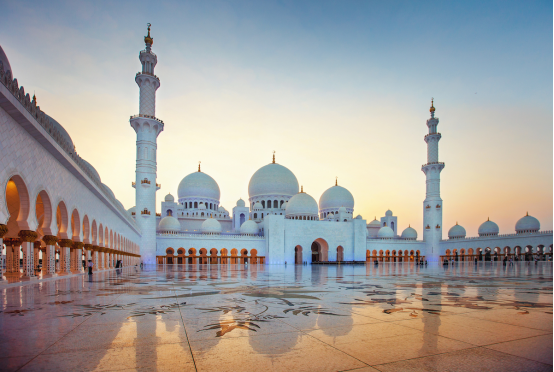
A mosque is not just a place of worship, it is the spiritual heart of Muslim society and the convergence point of morality, culture and faith. For hundreds of years, the architecture of mosques has been an important symbol in Muslim society. It not only represents the continuation of religious beliefs, but also witnesses the evolution of culture and society. It can be said that the evolution of the form and function of mosque architecture is a mirror of the historical changes in the Islamic world. Have you ever thought about how the architectural design of a mosque can carry so much culture and history?
Mosque Design: From Geometry to Spirituality
The architectural design of a mosque usually starts with simple geometric shapes, initially emphasizing a sense of space for seclusion and spiritual meditation. Over time, this simple prototype has evolved into a more complex design – from the earliest pillared mosques to today’s magnificent structures, these changes are closely related to the spread of Islam and the development of culture. Have you ever thought about it? Is there a historical story behind the spatial design of each mosque?
For example, the Quba Mosque in Medina (622 AD), the Kairouan Mosque in Tunisia (670 AD), and the Umayyad Mosque in Damascus (715 AD) all incorporated ancient Greek and Roman architectural elements in their designs, demonstrating the Islamic world’s absorption and localization of external cultures. However, over time, the function of mosques has gone far beyond worship. They have gradually become centers of education, cultural dissemination, and even social reconstruction. You can’t help but wonder if these changes and the reinterpretation of Islamic values are also reflected in architectural style?

Mihrab: Guidance of Faith
One of the most striking features of mosque architecture is the mihrab, a niche that indicates the direction of Mecca – Muslims pray in this direction every day. No matter where a mosque is located in the world, its mihrab always faces Mecca. Even in places like India and Egypt, the mihrab will slightly adjust its direction according to the geographical location. Does this give you a sense of sacredness that transcends time and space? The design of a mosque is not only a carving of space, but also a precise guide to faith.
Interestingly, the design of the mihrab is different. In the Spanish example, the mihrab is built as a small room, which is a rare design in the Islamic world. These design differences make people wonder: the architecture of mosques is not just unified in form, but how do they uniquely convey the same core of faith in different cultural contexts?
Emotional Expression of Mosques: From Space to Light
Mosque architecture is not only a manifestation of functional space, it also profoundly affects the emotional experience of believers. Through the transitional space of the building, the mosque leads believers from the hustle and bustle of the outside world to the sacred worship space, as if experiencing a spiritual transformation. Here, space is not only physical, it has strong emotional fluctuations, and through layers of transition, people can experience a close and intimate sense of unity with God. Have you ever thought about how architectural design can help people enter a more sacred spiritual state through the gradual “transition” of space?
The use of natural light is an important tool in this process. Through carefully designed windows and openings, sunlight enters the mosque, illuminating the solemn inner walls, while also strengthening the connection between the earth and the sacred. Light here is no longer a purely physical phenomenon, it is a bridge to the sacred, illuminating the hearts of believers. By designing in this way, architects are not only shaping physical space, but also constructing a sacred environment for believers to communicate with the gods.
Art Deco: The Power of Language
The decorative art inside and outside the mosque, especially the calligraphy on the wall, is also one of its important features. These calligraphy works are often excerpts from the Quran, praises to the ruler, or mottos related to faith. Every stroke seems to tell a profound story, allowing believers to feel the divine power every time they gaze at it. These calligraphy works are not only decorations, they are bridges that closely connect faith with daily life.
Have you discovered that these seemingly simple calligraphy contain great wisdom and emotions? How do they bring believers closer to the gods through the power of words?
The architectural heritage of mosques: from simplicity to grandeur
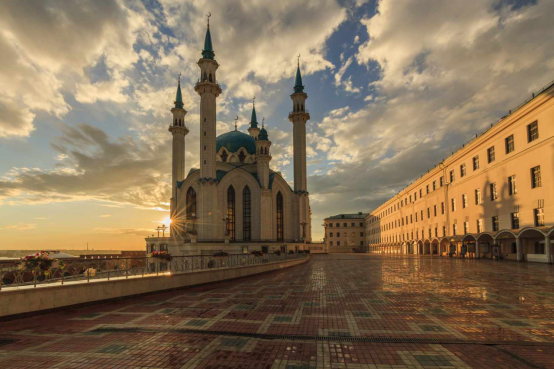
From the initial simple geometric form to today’s magnificent architecture, mosques have gone through hundreds of years of development, and they have witnessed the cultural splendor and changes of the Islamic world. Each mosque is a symbol of creativity, faith and culture, and they tell a story about faith, society and history through design.
Mosques are not just for accommodating worship, they carry a nation’s cultural identity and historical memory. Today, when we admire these sacred buildings, we not only see the magnificent architectural style, but also feel the spiritual power that transcends time and space and is passed down from generation to generation.
Conclusion
As an important part of Islamic culture, mosque architecture, with its achievements in architectural art, demonstrates the deep interweaving of faith and culture. From the original geometric form to the modern magnificent structure, mosque architecture embodies the reverence for the sacred in every detail. Their existence is the harmonious unity of spiritual devotion and architectural splendor, and is also our tribute to the immortal heritage of Islamic culture.

Related Posts